Philip Cortez
Branch: Texas House District: 117
Additional Information from ATPE
First elected to the Texas House in 2012. Cortez lost his reelection bid in 2014. He was reelected to his House seat in 2016. Current term expires January 2027. Running for re-election; won the Democratic primary and will be on the November 2026 general election ballot.
Endorsed in the 2022 general election by Texas Parent PAC, a pro-public education organization that advocates for adequate and equitable funding of public schools, local control, teacher quality, and the prevention of private school vouchers. He also received the group's endorsement in the 2020, 2018, and 2014 elections.
Endorsed by the editorial board of the San Antonio Express-News in the 2020 general election. He also received their endorsement in the 2018 election and in 2014.
In the 2018 election, he was recommended favorably by Texans for Public Education, a grassroots educators' group that researched and rated candidates in the 2018 election based on their stances toward public schools.
Voting records currently not available. Please check back later.
Survey Responses
HAS NOT RESPONDED TO THE 2026 CANDIDATE SURVEY.
Did not respond to the 2024, 2022, 2020, 2018, or 2016 ATPE Candidate Survey.
Below are the candidate's responses to the 2014 ATPE Candidate Survey:
1. Is there a need to increase funding to meet the needs of our student population? If so, how would you recommend securing more revenue for public education?
Yes there is definitely a need to increase the funding for the needs of our student population. The funding formula set by the state now is not working and that would be the first avenue that needs to be addressed.
2. Regardless of the level of funding, do you believe that Texas public education dollars are being spent in an appropriate manner, or should the funds be reallocated and spent in different ways?
I believe that the local leadership at school districts are the best decision makers as to how the dollars are spent. The local leadership (both the elected and administrative) are involved in the day-to-day operations of the school district and can better determine the use of allocated funds.
3. Would you vote to spend public tax dollars on a voucher, tax credit or scholarship that allows students to attend non-public schools in grades K–12? Why or why not?
No I would not vote to spend public tax dollars on vouchers, tax credits, or scholarships. Public schools are already inadequately funded and thus cannot afford any decreases.
4. Do you believe the Teacher Retirement System (TRS) should be maintained as a traditional defined benefit pension plan for all future, current and retired educators, or would you vote to convert TRS to a defined contribution plan that is more like a 401(k), in which future benefits are not guaranteed? Why?
It should be maintained as a traditional defined benefit pension plan for all future, current, or retired educators. Educators have earned these benefits.
5. Local decisions on whether to continue a teacher's employment and how much to pay each teacher are often based on evaluations. To what extent, if any, should a teacher's evaluation be based on his students' scores on state standardized tests? If you believe student test scores should factor into a teacher's evaluation, how would you recommend evaluating teachers in grades or subjects for which there are no state standardized tests?
I do not believe in the teach to the test method for determining teacher's pay or employment.
6. Would you vote to maintain a hard cap on the number of students per class, or should school administrators be given more flexibility to increase class sizes? (Currently, the law imposes a cap of 22:1 in grades K–4 but allows schools to obtain a waiver, a step many of them routinely take.)
I would vote to maintain a hard cap on the number of students per class.
7. If a public school in your district failed to meet state accountability standards for two or more consecutive years, would you support allowing a private entity to take over the management of that school, essentially converting it to a charter school?
No I would not support the public school being converting to a charter school.
8. Do you believe charter schools in Texas have been largely successful? Should their presence be expanded? Why or why not?
I believe that the accountability standards for charter schools need to fall in line with the standards public schools are held to. Both entities receive public tax dollars and both should be held accountability to the public.
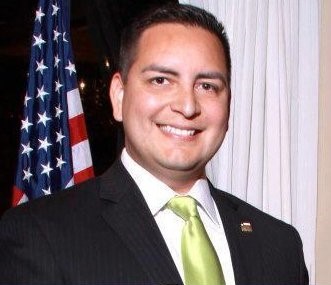
Philip Cortez
-
Party:
Democrat
-
Branch:
Texas House
-
District:
117
-
Address:
P.O. Box 276155
City:San Antonio
State:TX
- Website:
-
Phone:
(210) 370-3268
- Email: