Joe Moody
Branch: Texas House District: 78
Additional Information from ATPE
First elected to the Texas House in 2008. Moody was defeated in his 2010 re-election bid and then reelected to the House in 2012. Current term expires January 2027. Running for re-election; ran unopposed in the Democratic primary and will be on the November 2026 general election ballot.
Appointed as House Speaker Pro Tem for the 86th Legislature in 2019.
Endorsed in the 2022 and 2018 elections by Texas Parent PAC, a pro-public education organization that advocates for adequate and equitable funding of public schools, local control, teacher quality, and the prevention of private school vouchers.
In the 2018 election, he was recommended favorably by Texans for Public Education, a grassroots educators' group that has researched and rated candidates in the 2018 election based on their stances toward public schools.
Voting records currently not available. Please check back later.
Survey Responses
RESPONSES TO THE 2026 ATPE CANDIDATE SURVEY:
1. If elected, what are your top priorities for Texas public education?Please describe any specific goals or legislative initiatives you would pursue to strengthen the state’s public education system.
Funding for both teacher pay and per-student spending is always at the top of the list for me. I also think we need to get both politics and high-stakes testing out of our classrooms so that teachers can teach.
Teachers are the primary caretakers of the young generation in Alief, so they deserve the Funds, Safety, and Security. I will make our schools a safe zone for children in our community, as they spend more time in school than they spend at home during the semester.
2. Public Education Funding:The 89th Legislature passed an $8 billion school funding bill, HB 2. However, despite years of unanswered “inflationary challenges, a large majority of that funding was earmarked to specific programs and did not supply districts with significant flexible funding, leaving the majority of Texas students in districts with deficit budgets and other significant funding challenges. Do you believe Texas public schools should receive additional funding? If so, how should the state pay for it, and should that funding be earmarked at the state level or provide districts with flexible dollars?
I believe schools need additional funding and the flexibility to use it to address their unique needs. No one knows how dollars can be better spent than the schools spending them. As for how to pay for it, we simply have to decide it's a priority--there's no shortage of funding available.
3. ESA Vouchers:Education savings accounts (ESAs) redirect public funds to private or home schools. How do you believe Texas should fund public schools, traditional and charter, alongside ESA vouchers? How should ESA spending be held accountable to taxpayers?
I strongly oppose vouchers and believe that public money should be going to our constitutionally mandated public schools. Now that they've been signed into law, though, there should be radical transparency--we need to see where this money is going and ensure that it's at least being used for the educational purposes it was intended to serve.
4. Teacher Recruitment and Retention:Under HB 2, passed in 2025, all educators in core content courses (math, English, science, and social studies) must be certified by 2030. While this is a good start, more can and should be done to ensure high-quality teachers continue to enter the classroom. What are your suggestions to improve the quality of the new teacher pipeline?
More money for teachers, period. We need to focus at least as much on what we offer to teachers as we do on what we demand from them.
5. Educator Pay and Benefits:The 89th Legislature passed legislation creating a new mechanism to provide only classroom teachers with tiered raises based on early years of service and their district’s student enrollment. While the raises were significant, they did not apply to all campus educators, and the program created a significant negative funding stream at the district level due to unfunded increased costs for non-salary compensation tied to payroll, such as TRS retirement contributions. Do you support a state-funded across-the-board pay raise for all Texas educators? How would you ensure that compensation keeps pace with inflation and remains competitive with other professions?
I absolutely support across-the-board pay raises that include everyone who contributes to educating our children, and there's no mystery to how we calibrate it with inflation and other professions--we have those numbers and should ensure that we keep teacher pay fair and competitive based on them.
6. Educator Health Care:The high cost of health insurance for active and retired educators continues to reduce take-home pay, with educators shouldering the vast majority of their ever-increasing heath care costs. How would you address the affordability and sustainability of educator health care, particularly the TRS-ActiveCare and TRS-Care programs?
Again, we need to invest in those programs, and we should be looking at cutting administrative costs and creating greater efficiencies as we do it. Developments like telehealth are part of that path, but I also think we need direct government intervention in areas like prescription drug costs if we want to make healthcare affordable.
7. Retirement Security:Do you believe the Teacher Retirement System of Texas (TRS) should remain a defined-benefit pension plan for all current and future members? If not, what is your plan to provide a secure retirement for Texas educators, particularly considering that state law has been set up such that most districts do not participate in Social Security?
I do. Those in TRS, current and future, have earned a steady, stable retirement. We owe it to them to ensure an actuarially sound system they can depend on in the way that we've been able to depend on them.
8. Accountability and Assessment Reform:The Legislature has passed a new “through-year” multi-test model under HB 8. What role should standardized testing play in evaluating students, teachers, and schools? Should test results continue to determine A–F accountability ratings or teacher pay?
Tests should never be more than a diagnostic. We're going in exactly the wrong direction by tying ratings or funding to them.
9. Parental Rights and Community Voice:Recent legislative debates have focused on “parental rights” in education. In your view, what is the appropriate balance between accommodating the often conflicting wishes of individual parents while maintaining policies that reflect the broader community’s educational priorities and still providing consistency and an appropriate level of professional deference to educators?
These are complicated issues to make blanket statements about, but for the most part, education involves challenging young minds. I think we should trust our educators, and although it's reasonable to provide parents opportunities to opt their children out of instruction in certain circumstances, we have to remember that if children aren't exposed to uncomfortable facts, we aren't fully educating them.
10. School Safety:HB 3 (2023) imposed new school safety requirements but did not fully fund them. Although the 89th Legislature increased the School Safety Allotment, many districts continue to face substantial unfunded staffing and facility costs associated with school safety laws. How would you make schools safer and ensure the state provides adequate funding to meet safety mandates?
Funding is the key--we can't say we care about school safety but then push the burden down onto them. In fact, I passed an amendment in the House (stripped later in the process) that would've dramatically increased the funding allotted for school safety. We have the money to do this at the state level, and we should be doing so.
11. Curriculum and Local Control:What do you believe is the proper role of the State Board of Education, the Texas Education Agency, and local school districts in setting curriculum standards and selecting instructional materials?
While there's obviously an overarching supervisory role the state should play, I've been alarmed by the increasingly politicized choices being made. We're moving towards indoctrination, not education. The state-level focus should be standards, not the content or methods that get children meeting those standards; our local districts are best suited to that.
12. Educator Rights and Professional Associations:State law allows educators and other public employees to voluntarily join professional associations such as ATPE and have membership dues deducted from their paychecks at no cost to taxpayers. Do you support or oppose allowing public employees to continue exercising this right? Why or why not?
100%. I'm pro-union, whether it's a laborer or an educator or anyone else, and I'll fight any attempt to stand in the way of the right to organize with everything I've got.
DID NOT RESPOND TO THE 2024 ATPE CANDIDATE SURVEY.
Not applicable for 2022; the candidate was unopposed.
RESPONSES TO THE 2020 ATPE CANDIDATE SURVEY:
1. If elected, what will be your top priorities for public education?
In 2019, the state legislature infused more funds into our public education system. It was a long overdue action, and if I am elected, protecting that commitment will be my top priority. In addition to that, we need to continue to move toward universal Pre-K as well as address funding issues tied to English language learners and special education students.
2. What are your recommendations for funding public education, including securing the necessary revenue to sustain the improvements made by House Bill 3 in 2019? Do you believe additional funding is needed?
Additional funding is still needed to address certain populations in our schools. The House is currently delving into tax policy to identify loopholes to close so that we can keep our commitment to our public schools.
3. How would you address the challenge of rising healthcare costs facing Texas educators and ensure that active and retired educators have access to affordable healthcare?
The Texas House is currently researching ways to address healthcare costs through the work of the bi-partisan Select Committee on Statewide Health Care Costs. I will track the work of that committee, and work with its members to implement the changes they recommend that would improve costs for educators and retired educators.
4. Do you believe the Teacher Retirement System (TRS) should be maintained as a traditional defined benefit pension plan for all future, current, and retired educators, or do you support converting TRS to a defined contribution plan that is more like a 401(k) plan, in which future benefits are not guaranteed?
We should maintain it as a traditional defined benefit pension plan for all future, current and retired educators.
5. What do you feel is the proper role of standardized testing in Texas's public education system? For instance, should student test scores be used for school accountability purposes, for evaluating teachers, for measuring student progress, etc.?
Testing should be used as a tool to identify student progress and potential issues that need to be addressed with that student's education plan.
6. To what extent should student performance determine teacher pay?
The two should not be tied together. There are far too many external factors that impact student performance to tie it to teacher pay.
7. Would you vote to create any type of voucher, tax credit, scholarship, education savings account, or other program aimed at paying for students, including any subpopulation of students, to attend non-public K-12 schools, such as private or home schools?
No.
8. State law allows educators and other public employees to voluntarily choose to join professional associations such as ATPE and have membership dues deducted from their paychecks at no cost to taxpayers. Do you support or oppose letting all public employees continue to exercise this right?
I support teachers being able to use their money as they see fit. I have played an active role in the last two sessions in protecting this right.
9. What role, if any, should charter schools have in the public education system, and do you feel the number of charter schools operating in Texas should be reduced or expanded?
The number of charter schools should be reduced, or at the very least, not expanded. Charter schools at the time of their inception were essentially pilot programs to explore different approaches. They were meant for a limited role, and we should get back to their original purpose.
10. Recent legislation has made it possible for school districts to exempt themselves from many state laws (e.g., class-size limits, requirements for hiring certified teachers, minimum salary schedules, school calendar restrictions, etc.) by partnering with outside entities, allowing campuses to be managed by a charter school operator, or becoming part of a District of Innovation, for example. Do you agree with this type of deregulation of public schools, and how should such non-traditional schools be governed?
De-regulation like this is something that I oppose. To the extent we have these non-traditional schools, they should face similar oversight as traditional public schools.
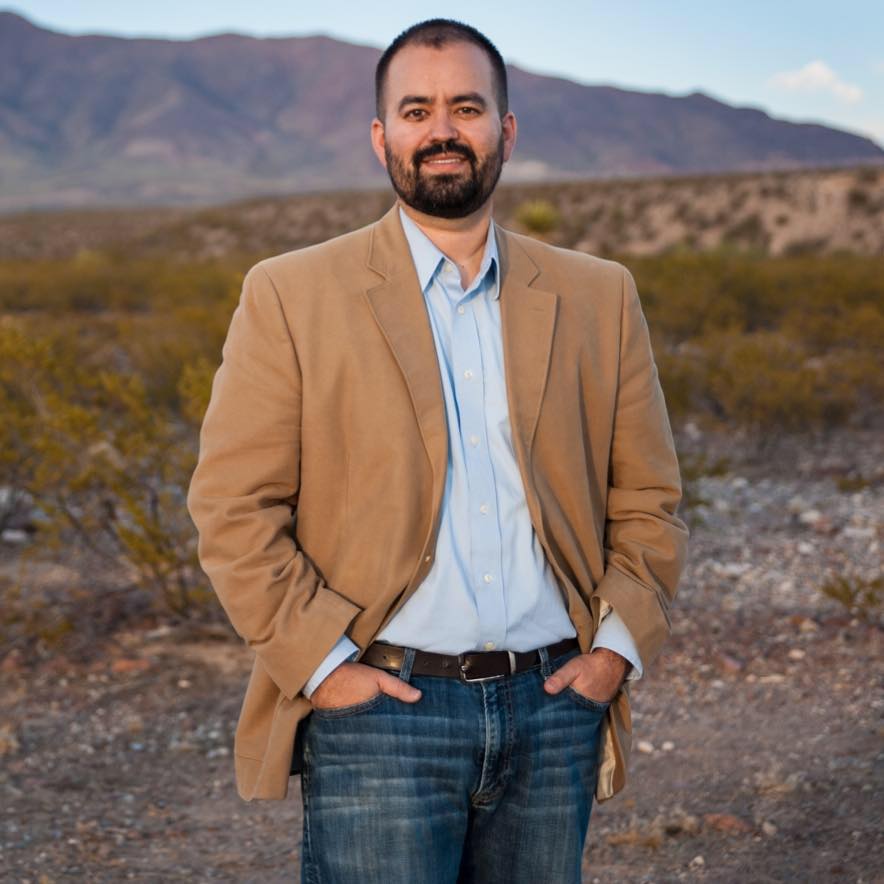
Joe Moody
-
Party:
Democrat
-
Branch:
Texas House
-
District:
78
-
Address:
PO Box 920827
City:El Paso
State:TX
-
Phone:
(915) 667-2634
- Email: