Drew Darby
Branch: Texas House District: 72
Additional Information from ATPE
First elected to the Texas House in 2006. Current term expires January 2027. Running for re-election; ran unopposed in the Republican primary and will be on the November 2026 general election ballot.
Member of the House Appropriations and Higher Education committees.
Supported by one or more pro-public education organizations in the 2024 Texas primaries, including Texas Parent PAC.Endorsed in the 2022 election by Texas Parent PAC, a pro-public education organization that advocates for adequate and equitable funding of public schools, local control, teacher quality, and the prevention of private school vouchers. Darby also received the group's endorsement in the 2020 and 2006 elections.
In 2018, he was recommended favorably by Texans for Public Education, a grassroots educators' group that researched and rated candidates in the 2018 election based on their stances toward public schools.
Statement from Darby's campaign website in 2014: "In the 83rd session, he was proud to support retired teachers by ensuring their pension fund is fiscally sound."
Voting records currently not available. Please check back later.
Survey Responses
HAS NOT RESPONDED TO THE 2026 ATPE CANDIDATE SURVEY.RESPONSES TO THE 2024 ATPE CANDIDATE SURVEY:
1. If elected, what are your top priorities for public education?
If re-elected, my top priorities are the following:
- Increase overall funding to Texas schools
- Boost teacher salaries and school safety funding
- Resist any unfunded mandates on schools
- Oppose the creation of a new education entitlement program like vouchers
- Reform standardized testing and A-F accountability
The State of Texas already has a voucher program for special needs students. Instead of creating another entitlement program, the legislature should fully fund that effort. Additionally, my voting record stands for itself on the position of vouchers. I have consistently supported public education and opposed the creation of a new education entitlement.
3. In 2023, the Texas Legislature passed House Bill (HB) 3 requiring a number of new school safety measures. However, many believe the Legislature did not adequately increase funding to cover the cost of the mandates in HB 3 or other locally adopted school safety measures. How would you work to make schools safer and ensure such initiatives are properly funded?
The legislature took positive steps on school safety reforms in 2023. However, since the legislature mandated these reforms, the legislature should pay for these reforms. The first step is to substantially raise the school safety allotment and then use additional surplus to fund school safety measures.
4. Despite a record-breaking surplus of $38 billion during the 2023 legislative session, school funding formulas were not increased to keep pace with inflation since they were last adjusted in 2019. Do you believe Texas public schools should receive additional funding? If so, how should the state pay for it?
Yes, Texas public schools should receive additional funding – including raising the basic allotment and boosting teacher pay. The state should use the majority of surplus funds to invest in public education.
5. Texas has faced growing teacher shortages in recent years, with many schools hiring uncertified teachers to fill the gaps. How would you work to ensure Texas public schools have an adequate number of trained and certified teachers?
First and foremost, the legislature must invest more in public education. We must take steps to encourage teachers to return to the classroom by increasing pay, removing burdensome requirements, and providing benefits that are compensatory to state employees.
6. Inadequate compensation hampers the recruitment and retention of high-quality educators. Do you support a state-funded across-the-board pay raise for all Texas educators?
Yes, I support a state-funded across-the-board pay raise for all Texas educators. My voting record reflects that I voted twice during the 88th Regular Legislative session to raise teacher pay and school funding but since it did not contain a voucher, the voucher lobby said no.
7. The high cost of health insurance available to educators is a significant factor decreasing their take-home pay. How would you address the challenge of rising health care costs facing Texas educators and ensure access to affordable health care?
For too long, education employees – both active and retired – have faced significant challenges in the health care marketplace. We should continue to prioritize TRS solvency and begin the processing of transitioning educators to benefits equal to those of state employees.
8. What do you feel is the proper role of standardized testing in the Texas public education system? For instance, should student test scores be used as a metric in determining teacher pay, school accountability ratings, evaluating teachers, measuring student progress, etc.?
Texas must reform our current standardized testing. It is outdated and does not properly reflect the education in our public schools. Most policymakers, education leaders, and parents agree that we do need some metrics, but the STAAR test and A-F accountability need to be reforms. Standardized testing should not be tied to teacher pay raises. Any reforms should include multiple letter grades, indicators beyond a test, and parental feedback.
9. In your opinion, what is the proper balance between accommodating an individual parent’s or student’s wishes and the taxpaying community’s interest in directing and maintaining an optimal educational environment for the student population as a whole?
This is a delicate balance that should be mainly left up to local control. Teachers, parents, taxpayers, and duly elected school board members in each community should be able to determine the optimal education environment on an individual and collective basis.
10. Do you believe the Teacher Retirement System (TRS) should be maintained as a traditional defined-benefit pension plan for all future, current, and retired educators, or do you support converting TRS to a defined-contribution structure that is more like a 401(k) plan, in which future benefits are not guaranteed?
The legislature has done many positive things over the last few sessions to benefit the TRS – 13th checks, a COLA, increased funding, and expansion of benefits. But even with these victories, work remains, and TRS-Care needs much more attention. The current funding system is broken and does not match growing healthcare costs and trends. The legislature must make the permanent fix of TRS-Care a priority. Right now, radical organizations and individuals have been pushing to change the defined benefit plan to a defined contribution plan, which will harm many retired teachers. Around 95% of school employees in Texas do not pay into Social Security, meaning that their TRS annuity is their primary source of retirement income. I am firmly committed to keeping the defined benefit plan for current and future retirees.
11. State law allows educators and other public employees to voluntarily choose to join professional associations such as ATPE and have membership dues deducted from their paychecks at no cost to taxpayers. Do you support or oppose letting all public employees continue to exercise this right?
Yes, I support letting public employees continue to exercise their right to have membership dues deducted from their paychecks at no cost to taxpayers.
Not applicable for 2022; the candidate was unopposed.
Did not respond to the 2020 or 2018 ATPE Candidate Survey.
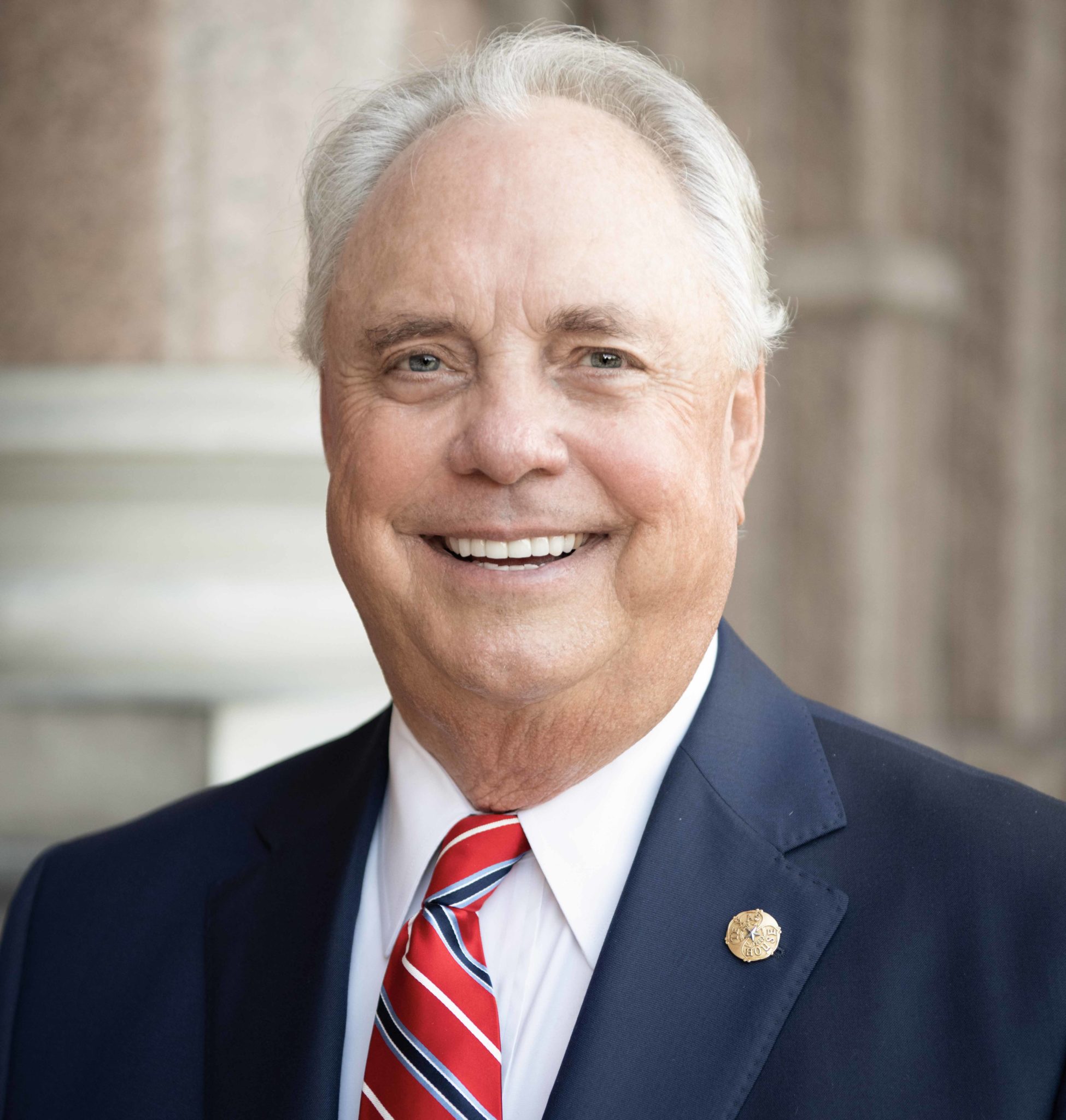
Drew Darby
-
Party:
Republican
-
Branch:
Texas House
-
District:
72
-
Address:
PO Box 3284
City:San Angelo
State:TX
- Website:
-
Phone:
(325) 486-3739
- Email: