Chris Turner**
Branch: Texas House District: 101
Additional Information from ATPE
First elected to the Texas House in 2008. Turner was defeated in his re-election bid in 2010, then re-elected in 2012. Current term expires January 2027.
*Lost his reelection bid for Texas House District 101 in the 2026 Democratic primary election. Turner will not be on the November 2026 general election ballot.
Endorsed in the 2022 election by Texas Parent PAC, a pro-public education organization that advocates for adequate and equitable funding of public schools, local control, teacher quality and the prevention of private school vouchers. He also received the group's endorsement in the 2014 election.
Turner ran unopposed for re-election in 2020.
In the 2018 election, Turner was recommended favorably by Texans for Public Education, a grassroots educators' group that researched and rated candidates in the 2018 election based on their stances toward public schools.
Voting records currently not available. Please check back later.
Survey Responses
RESPONSES TO THE 2026 ATPE CANDIDATE SURVEY:
1. If elected, what are your top priorities for Texas public education?Please describe any specific goals or legislative initiatives you would pursue to strengthen the state’s public education system.
If reelected, my top priorities for public education are fully funding our public schools and reversing the private school voucher scam, strengthening our teacher workforce with strong pay, protecting retirement and health benefits, and preserving district control so our elected school boards can best serve their communities.
2. Public Education Funding:The 89th Legislature passed an $8 billion school funding bill, HB 2. However, despite years of unanswered “inflationary challenges, a large majority of that funding was earmarked to specific programs and did not supply districts with significant flexible funding, leaving the majority of Texas students in districts with deficit budgets and other significant funding challenges. Do you believe Texas public schools should receive additional funding? If so, how should the state pay for it, and should that funding be earmarked at the state level or provide districts with flexible dollars?
Our public schools receive record-low amounts of funding, and the negative impact has been clear. While HB 2 was a positive step forward, our schools remain underfunded, especially related to inflation and rising costs. The state must further increase the basic allotment and provide districts with more flexible funding, so school boards and school districts can allocate funding to respond to their communities' needs.
During the 89th Legislative Session, when local public school funding was jeopardized by the Tarrant Appraisal District’s new appraisal policies, I passed SB 973, which includes an amendment that requires annual reappraisals at market value in accordance with the existing Tax Code. This ensures that school districts will not lose funding due to failing the Texas Comptroller’s Property Value Study.
Education savings accounts (ESAs) redirect public funds to private or home schools. How do you believe Texas should fund public schools, traditional and charter, alongside ESA vouchers? How should ESA spending be held accountable to taxpayers?
Public education funds should be used to strengthen Texas public schools that serve the vast majority of Texas students. Private school vouchers are the single biggest threat to our public education system. I have voted against private school vouchers at every opportunity I have had. I was part of the successful fight against vouchers in 2023. I fought against and voted against vouchers when they ultimately and unfortunately passed in 2025.
I support requiring any private school that accepts taxpayer-funded vouchers to meet the same transparency, accountability, and oversight standards as public schools. I support requiring private schools that accept state funds to comply with nondiscrimination protections, provide services for students with disabilities, follow the same requirements for teacher certification and training, and participate in state testing.
Under HB 2, passed in 2025, all educators in core content courses (math, English, science, and social studies) must be certified by 2030. While this is a good start, more can and should be done to ensure high-quality teachers continue to enter the classroom. What are your suggestions to improve the quality of the new teacher pipeline?
Certification requirements under HB 2 are a step in the right direction, but improving the teacher pipeline requires more comprehensive solutions. To improve the quality of the new teacher pipeline, I believe the state should allocate general revenue funds to support prospective educators seeking training and certification. Additionally, we should provide loan forgiveness for public school educators, increase teacher pay, and provide our schools with the resources and funding they need.
In 2013, I passed legislation requiring teachers and administrators of charter schools to hold a baccalaureate degree, making sure our students are taught by qualified educators.
The 89th Legislature passed legislation creating a new mechanism to provide only classroom teachers with tiered raises based on early years of service and their district’s student enrollment. While the raises were significant, they did not apply to all campus educators, and the program created a significant negative funding stream at the district level due to unfunded increased costs for non-salary compensation tied to payroll, such as TRS retirement contributions. Do you support a state-funded across-the-board pay raise for all Texas educators? How would you ensure that compensation keeps pace with inflation and remains competitive with other professions?
I support a state funded, across-the-board pay raise for all Texas educators and school support staff.
In 2019, during the 86th Legislative Session, I brokered the deal to end the stalemate on Texas' major school finance legislation by crafting a statewide teacher pay raise plan that was ultimately supported by both the House and Senate. Two years later, in 2021, during the 87th Legislature, I passed legislation safeguarding the pay raises for teachers and full time staff. This legislation required pay to increase going forward commensurate with future Basic Allotment increases. Unfortunately, the Legislature has not kept up with needed adjustments to the Basic Allotment, which has harmed educator and staff compensation and the ability of school districts to meet the needs of their students.
The high cost of health insurance for active and retired educators continues to reduce take-home pay, with educators shouldering the vast majority of their ever-increasing heath care costs. How would you address the affordability and sustainability of educator health care, particularly the TRS-ActiveCare and TRS-Care programs?
Healthcare costs are rising so quickly that TRS-active care premiums have skyrocketed to unmanageable levels. Our teachers are not paid what they deserve to begin with, and they should not have to carry this additional burden. In the next legislative session, the state must fully fund TRS budget requests to mitigate skyrocketing insurance premiums and ensure TRS can keep operating.
7. Retirement Security:Do you believe the Teacher Retirement System of Texas (TRS) should remain a defined-benefit pension plan for all current and future members? If not, what is your plan to provide a secure retirement for Texas educators, particularly considering that state law has been set up such that most districts do not participate in Social Security?
Yes, public employee retirement systems provide stable, guaranteed benefits. TRS should remain a defined-benefit plan.
If reelected, I will continue to advocate for increased state contributions to TRS and support permanent, recurring cost-of-living adjustments so retirement benefits can keep pace with inflation. Retirement security should be predictable, fully funded, and a core responsibility of the state rather than shifted onto employees who have already earned their benefits.
The Legislature has passed a new “through-year” multi-test model under HB 8. What role should standardized testing play in evaluating students, teachers, and schools? Should test results continue to determine A–F accountability ratings or teacher pay?
Standardized testing should be one tool among many in determining student and school performance but should not determine A-F accountability. A-F accountability ratings oversimply school performance, place an undue burden on test performance, and are used to justify harmful privatization and state takeovers of education, which is why I voted against this system to begin with.
During the 87th Legislative Session, I passed HB 3007 and HB 3011, which made the A-F school accountability system more fair and accurate by ensuring school districts are given access to the complete data set used to determine their rating.
Recent legislative debates have focused on “parental rights” in education. In your view, what is the appropriate balance between accommodating the often conflicting wishes of individual parents while maintaining policies that reflect the broader community’s educational priorities and still providing consistency and an appropriate level of professional deference to educators?
Parents should be partners in public education, but the state should not use parental rights as a pretext to impose top-down political control over public institutions. During the 89th legislative session, I voted against SB 12, which restricted diversity, equity, and inclusion efforts in public schools and put new restrictions on teachers, counselors and even school nurses. If reelected, I will continue to oppose legislation that uses the guise of parental rights to erode local control, silence educators, and put partisan politics into classrooms.
10. School Safety:HB 3 (2023) imposed new school safety requirements but did not fully fund them. Although the 89th Legislature increased the School Safety Allotment, many districts continue to face substantial unfunded staffing and facility costs associated with school safety laws. How would you make schools safer and ensure the state provides adequate funding to meet safety mandates?
Every parent deserves the peace of mind that their child is learning in a safe and secure environment. During the 88th Legislative Session, I voted for HB 3, which requires districts to have at least one armed security officer per campus, mandates mental health training for employees who regularly interact with students, and increases funding for school safety measures. One of the primary reasons I voted for this legislation was that it initially included sufficient funding. This funding was removed in the Senate, which I fought against. I will continue fighting to make sure that our schools have sufficient funding to keep their students safe.
11. Curriculum and Local Control:What do you believe is the proper role of the State Board of Education, the Texas Education Agency, and local school districts in setting curriculum standards and selecting instructional materials?
The State Board of Education and TEA should set broad academic standards and goals, but local school districts should retain primary authority over curriculum implementation and instructional materials. Locally elected boards are best positioned to reflect community values while meeting state standards.
12. Educator Rights and Professional Associations:State law allows educators and other public employees to voluntarily join professional associations such as ATPE and have membership dues deducted from their paychecks at no cost to taxpayers. Do you support or oppose allowing public employees to continue exercising this right? Why or why not?
I support allowing public employees to exercise their right to voluntarily join professional associations and have dues paid through their paychecks. During my time in the House, I helped defeat SB 2330 on numerous occasions, which would have prohibited payroll deduction for union fees, and I will continue to do all I can to prevent it, or similar measures, from becoming law. Our public employees and educators deserve basic rights that allow them to stand together to secure fair pay, strong benefits, and safe workplaces.
DID NOT RESPOND TO THE 2024 CANDIDATE SURVEY.
Not applicable for 2022; the candidate was unopposed.
Did not respond to the 2018 ATPE Candidate Survey.
Below are the candidate's responses to our 2016 survey.
1. Is there a need to increase funding in order to meet the needs of our growing student population and ensure that students have access to high-quality teachers? If so, how would you recommend securing more revenue for public education?
Yes. In order for our children to succeed, the Legislature must make our school finance system more equitable so that the schools and districts have the resources and tools they need. I was not serving in the Texas Legislature in 2011 when the $5.4 billion in funding cuts were made, but if I had been, I would have strongly opposed them. In 2013, House and Senate Democrats were able to successfully push for more funding for public education. This was an improvement, but we have still not fully restored the funding from the 2011 cuts. Inadequate funding for public education is the main reason I voted against the final budget in the last session. We need a new school finance system that improves funding levels and reduces the inequity between Texas school districts.
2. On what types of programs or specific areas of need would you prioritize the spending of state funds for public education?
We need to get serious about pre-K. Early childhood learning is proven to help children throughout their education, and we need to make it available for more Texas families. While I supported HB 4 in the last session, it did not go far enough and the funding provided for pre-K is inadequate. We also need to bolster support for dual-enrollment courses. Dual-enrollment is a great way to help high school students get ahead of the curve for college, but there is a cost associated with it. School districts and community colleges need support to ensure there are qualified faculty members available to teach these courses. We should also continue to promote the development of early-college high schools.
3. Would you vote to create a voucher, tax credit, grant, scholarship program, or any other type of incentive that would help cover the cost for students to attend non-public schools in grades K-12? Why or why not?
No. I strongly oppose private school vouchers. During my three terms in the Legislature, I have repeatedly voted against vouchers and will continue to do so. Public funds belong in public schools – period.
4. Would you vote to maintain a hard cap on the number of students per class, or should school administrators be given more flexibility to increase class sizes? (Currently, the law imposes a cap of 22:1 in grades K-4 but allows schools to obtain a waiver, a step a number of them routinely take.)
I strongly support maintaining a cap on the number of students allowed per class in grades K-4. Classroom sizes must be kept at reasonable levels to enhance student learning and achievement and help teachers maintain discipline and a reasonable work load. Crowded classrooms lead to students who leave unprepared to meet the next educational or life challenge, and lead to teachers who are overworked and under resourced.
5. What do you feel is the proper role of standardized testing in Texas's public education system? For instance, should tests be used for school accountability purposes, for evaluating teachers, for measuring the progress of students, etc.?
The primary purpose of standardized testing should be to measure students' individual progress with the goal of helping them succeed. We have gotten away from that standard, as testing has increasingly been used to judge teachers' performance and that of entire schools and school districts. I think this trend is unwise.
6. Local decisions on teacher pay and whether to continue a teacher's employment are often based on evaluations. To what extent, if any, should a teacher's evaluation be based on his students' scores on state standardized tests? If you believe student test scores should factor into a teacher's evaluation, how would you recommend evaluating teachers in grades or subjects for which there are no state standardized tests?
I do not think that basing teacher appraisals, jobs, or salaries on testing is appropriate. These tests aren't an adequate assessment of achievement; much less an assessment of a teacher's worth, and they shouldn't serve as a basis in which the performance of our teachers or our students is calculated.
7. Do you believe that the state should maintain a floor for classroom teacher salaries that includes annual increases based on experience over the first 20 years of a teacher's career?
Yes, I do and I will continue to fight for increased pay for teachers and more funding for our public schools.
8. If a public school in your district failed to meet state accountability standards, what course of action would you recommend? Are there circumstances in which you would support allowing a private entity to take over the management of that school (for instance, by converting it to a charter school, placing it under a special statewide district for low-performing schools, replacing the elected school board, or hiring an outside entity to operate the school)?
With fewer regulations and requirements than traditional public schools, transferring management of a school to a private entity is a risky proposition. Before a school gets to the point that this is even an option, we must ensure that the school has had every opportunity to meet the required benchmarks. In order for this to be accomplished, we need to ensure equitable funding for all schools and that environmental factors are addressed.
9. The cost of health insurance for active educators has dramatically increased over the last decade, while the portion paid by the state has remained flat and significantly lagged behind that of private employers. How would you address the increasing cost of covering the education workforce's health insurance needs?
I believe the state should contribute a greater share of the cost of health care in the TRS system. I also believe a host of reforms are needed in health care overall. For example, expanding Medicaid under the Affordable Care Act would reduce the number of uninsured, thereby reducing the amount of uncompensated care and ultimately reducing premiums for all Texans.
10. Do you believe the Teacher Retirement System (TRS) should be maintained as a traditional defined benefit pension plan for all future, current, and retired educators, or would you vote to convert TRS to a defined contribution plan that is more like a 401(k), in which future benefits are not guaranteed? Why?
I support the continuation of a defined benefit plan for TRS and will oppose efforts to move to a defined-contribution plan. During my three terms in the Legislature, I worked to block efforts to privatize state pension funds. I will continue that fight to protect these benefits so that public employees and teachers receive the benefits they were promised for their service to our state.
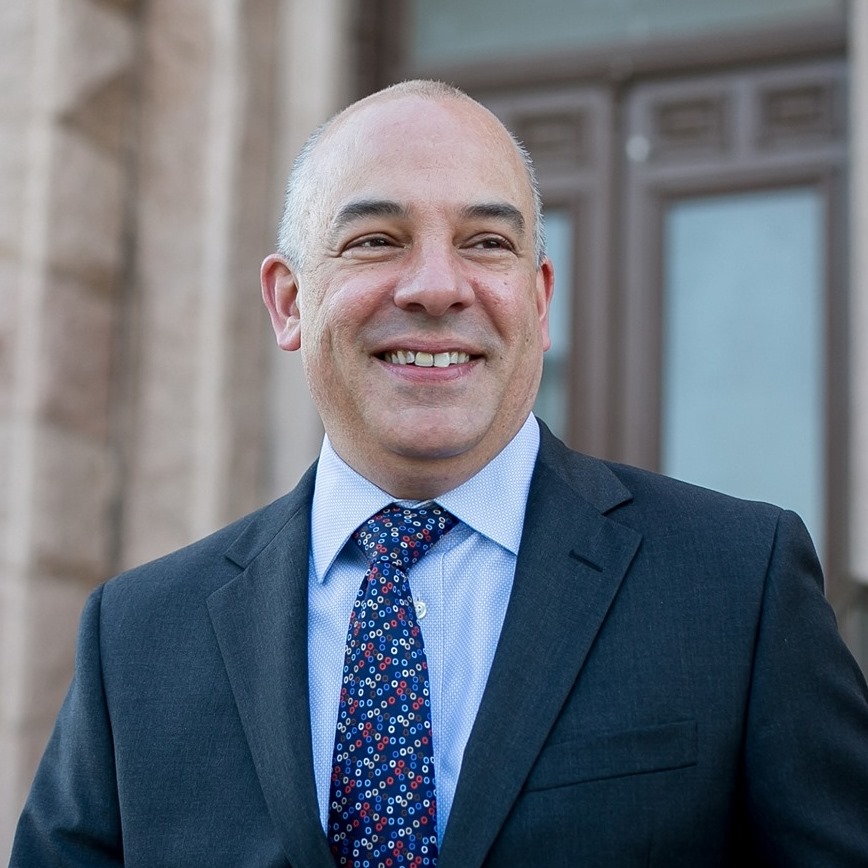
Chris Turner**
-
Party:
Democrat
-
Branch:
Texas House
-
District:
101
-
Address:
PO Box 182093
City:Arlington
State:TX
- Website:
-
Phone:
(817) 561-4900
- Email: