Nathan Johnson
Branch: Texas Senate District: 16 Status: Incumbent
Additional Information from ATPE
First elected to the Texas Senate in 2018. Current term expires January 2029.
Ran unsuccessfully for Texas attorney general in the 2026 Democratic primary.
Supported by one or more pro-public education organizations in the 2024 Texas primaries.
Endorsed in the 2024 Democratic primary election by the Dallas Morning News editorial board. He also received their endorsement in the 2022 general election and in the 2018 Democratic primary election.
Endorsed in the 2022 general election by Texas Parent PAC, a pro-public education organization that advocates for adequate and equitable funding of public schools, local control, teacher quality, and the prevention of private school vouchers. He also received the group’s endorsement in the 2018 general election.
In the 2018 election, Johnson was recommended favorably by Texans for Public Education, a grassroots educators' group that researched and rated candidates in the 2018 election based on their stances toward public schools.
Voting records currently not available. Please check back later.
Survey Responses
RESPONSES TO THE 2024 ATPE LEGISLATIVE CANDIDATE SURVEY:1. If elected, what are your top priorities for public education?
After consulting with education experts, I am convinced that the state should increase the basic allotment. The basic allotment itself is already structured to apportion money among different educational needs according to well-considered priorities and proportions. In particular, my bill to index the basic allotment with inflation (88R SB 88) would have raised teacher salaries more than $4,000 per year. The state should also provide teachers with benefits such as paid parental leave (88R SB 350) and access to current pre-K programs for free for their children (88R SB 89). I also believe that schools should be funded based on student enrollment instead of attendance (88R SB 263).
2. Voucher programs take many forms (tax credits, scholarships, education savings accounts, etc.) and are either universal or aimed at specific subpopulations (special education students, low-income students, students attending schools with poor A-F accountability ratings, etc.). Would you vote to create a voucher program of any type to pay for students to attend non-public K-12 schools, such as private or home schools?
No. I will continue to work hard to stop the turnover of public education to the private sector.
3. In 2023, the Texas Legislature passed House Bill (HB) 3 requiring a number of new school safety measures. However, many believe the Legislature did not adequately increase funding to cover the cost of the mandates in HB 3 or other locally adopted school safety measures. How would you work to make schools safer and ensure such initiatives are properly funded?
Many of my current school districts, and others across the state, have indicated that they are forced to run a deficit budget to meet the requirements of HB 3 from 2023. This is not right. In addition to my advocacy to raise the basic allotment and fund schools on enrollment instead of attendance, I will continue to work with my colleagues to increase the school safety allotment to a minimum of $100 per student, which is what is required to implement the provisions of the bill.
But there is more we can do. In the last session, I filed legislation to improve the mandated counselor-to-student ratio. Importantly, I also passed SB 123 in 2021 to add Social Emotional Learning (SEL) components to Texas public school students' existing character development curriculum. Individual students and the campus community benefit from learning to regulate their emotions, manage social relationships, and make responsible decisions. SEL programs promote skills and attitudes that can mitigate harmful and even violent behaviors.
Finally, gun safety laws are without question an important element of protecting kids in schools. I have long supported measures that the vast majority of Texans want to see implemented in our state: red flag laws, expanded background checks, a minimum age of 21 to purchase an assault weapon, a “cooling off” period, and reinstituting permit and gun-safety training requirements. Additionally, I’ve filed bills to increase the availability of safe storage locations and to temporarily create a mechanism for someone to place themselves on a do-not-sell list.
4. Despite a record-breaking surplus of $38 billion during the 2023 legislative session, school funding formulas were not increased to keep pace with inflation since they were last adjusted in 2019. Do you believe Texas public schools should receive additional funding? If so, how should the state pay for it?
Yes. My bill to index the basic allotment to inflation would have cost roughly $15 billion last biennium. The state had the money to ensure public schools were at least funded at the same level they were when HB 3 passed in 2019.
I wrote an op-ed in the Dallas Morning News about my concerns over dedicating so much funding to property tax cuts without funding schools like we said we would: https://www.dallasnews.com/opinion/commentary/2023/08/19/texass-over-sized-property-tax-cut-now-will-mean-a-big-bill-in-the-future/
5. Texas has faced growing teacher shortages in recent years, with many schools hiring uncertified teachers to fill the gaps. How would you work to ensure Texas public schools have an adequate number of trained and certified teachers?
According to the Texas Education Agency, the proportion of newly hired teachers without any type of teaching certification rose to an historic high of 28.8% during the 2022-2023 school year. This is very concerning. I will work to provide a clear path to certification, including paid mentorships and apprenticeship, streamlined certification for educators from other states, meaningful payment incentives for certified teachers, and loan repayment programs for certified teachers.
6. Inadequate compensation hampers the recruitment and retention of high-quality educators. Do you support a state-funded across-the-board pay raise for all Texas educators?
Yes. As mentioned earlier, my bill to increase the basic allotment and index it to inflation would have provided teachers with a $4,000 annual pay raise. The problem with a flat raise is that it would lose value over time. Because of reforms made in HB 3 in 2019, any increase in the basic allotment automatically allocates a percentage of funds to school employee salaries. By indexing the basic allotment to inflation, hard-working public school employees would receive pay raises more in line with increases in the cost of living.
7. The high cost of health insurance available to educators is a significant factor decreasing their take-home pay. How would you address the challenge of rising health care costs facing Texas educators and ensure access to affordable health care?
I have and will continue my efforts to mitigate increases in health care costs. I have been the leading voice for improving access to healthcare in Texas, including reducing costs. Nowhere is that more important than for our public school teachers. Currently, Texas only contributes $75 per employee for healthcare premiums. This is simply not enough.
In addition to addressing the need for affordable healthcare for state employees, I fully support measures that promote a healthy work-life balance. I filed SB 350 in 88R to provide paid parental leave for public school employees.
8. What do you feel is the proper role of standardized testing in the Texas public education system? For instance, should student test scores be used as a metric in determining teacher pay, school accountability ratings, evaluating teachers, measuring student progress, etc.?
Standardized testing can be helpful to assess students’ progress and used in planning to adjust lessons. The results should not be used to determine school accountability ratings, teacher pay increases, or student advancement to subsequent grade levels. Measuring student progress and success should extend beyond testing.
9. In your opinion, what is the proper balance between accommodating an individual parent’s or student’s wishes and the taxpaying community’s interest in directing and maintaining an optimal educational environment for the student population as a whole?
There should be a collaborative effort between all parties to ensure the best interest of students. However, I strongly believe that we must trust teachers to know what is best for their students. They are the professionals to whom we entrust our children. We don’t tell doctors how to do surgery so we shouldn’t tell teachers how to educate. Yet, just like healthcare, parents should be properly informed and consulted for important decisions.
10. Do you believe the Teacher Retirement System (TRS) should be maintained as a traditional defined-benefit pension plan for all future, current, and retired educators, or do you support converting TRS to a defined-contribution structure that is more like a 401(k) plan, in which future benefits are not guaranteed?
I voted against SB 321 in 2021 to create a defined-contribution plan for new state employees and I will defend defined-benefit plans in the Teacher Retirement System as well.
11. State law allows educators and other public employees to voluntarily choose to join professional associations such as ATPE and have membership dues deducted from their paychecks at no cost to taxpayers. Do you support or oppose letting all public employees continue to exercise this right?
I will continue to oppose and ridicule any effort to repeal public employees’ ability to voluntarily join professional associations and pay membership dues via paycheck deduction.
Did not respond to the 2022 ATPE Candidate Survey.
Below are the candidate's responses to the 2018 ATPE Candidate Survey:
1. If elected, what will your top priorities for public education be?
- Increase per-pupil allotment
- Block private school vouchers
- Updating WADA (moving toward equity rather than equality)
- Provide incentive for teachers to work in low performing schools
- Respect local ISD authority and foster innovation
- Reduce weight of standardized testing and factor in other measures, including attendance, graduation, psychological wellness
- Ensure careful regulation of charter schools and use them to as innovation laboratories, not replacements for public schools
2. Is there a need to increase state funding to meet the needs of our student population? If so, how would you recommend securing more revenue for public education?
Texas does not spend enough on public education. Nationally, Texas ranks deplorably low in per-pupil spending. We must raise the basic per-pupil allotment. There is broad consensus on this point. At the same time, individuals and businesses are overburdened by property taxes and the "Robin Hood" property tax system. Tax relief and increased school funding turn on the same action: a commitment by the state to supply general revenue at historic ratios – in the vicinity of 50% of the education budget.
Such a commitment would permit districts to invest in long-term projects like opening pre-K centers and program-specific teacher training. In the 84th session, pre-K was funded through a grant program, and then cut to $0 in the 85th session. School districts can't build programs in the face of such financial uncertainty. Additional changes might include: incentives that emphasize college-readiness and not merely graduation; increased autonomy for school districts with respect to allocation of funds, enabling them to develop the most effective ways of teaching their respective student populations; early education programs; recruiting, retaining, and continuing education for teachers; and re-calibrating how relative wealth among districts is determined.
3. Healthcare costs for educators have increased dramatically and outpaced the state's contributions, with many current and retired educators now paying more out of pocket than their counterparts in other states or in other professions. As a legislator, how would you address this crisis to ensure that active and retired educators have access to affordable healthcare?
In order the get a sensible solution for this problem passed through the Legislature we must address the problem of rising health care costs generally – expanding Medicaid would be a good start. Secondly, health benefits will have to be increased. We'll also need a one-time cash infusion to the Texas state teachers retirement system, paired with structural changes that ensure long-term sustainability while keeping our commitment to active and retired teachers. This is an appropriate use of the current largess in the Rainy Day Fund.
4. Do you believe the Teacher Retirement System (TRS) should be maintained as a traditional defined benefit pension plan for all future, current, and retired educators, or do you support converting TRS to a defined contribution plan that is more like a 401(k) plan, in which future benefits are not guaranteed?
Maintain as a defined benefit plan.
5. What do you feel is the proper role of standardized testing in Texas's public education system? For instance, should student test scores be used for school accountability purposes, for evaluating teachers, for measuring student progress, etc.?
The parents, teachers, and education experts I've consulted agree that there is a useful but limited role for some standardized testing for these purposes, but the current level is excessive and is overweighed at the expense of other important factors. The evaluation process should be overhauled, with more attention to student progress well-being, and to a teacher's success in reaching their particular students in ways not measurable by the standard (for-profit) standardized testing.
6. Would you support a state-funded across-the-board pay raise for all Texas classroom teachers?
Yes.
7. To what extent should student performance determine teacher pay?
Student performance should play a role in determining the quality of our teachers, but in terms of pay I believe it should be used as only part of a equation that takes into account many other factors.
8. Would you vote to create any type of voucher, tax credit, scholarship, education savings account, or other program aimed at paying for students, including any subpopulation of students, to attend non-public K-12 schools, such as private or home schools?
No.
9. State law allows educators and other public employees to voluntarily choose to join professional associations like ATPE and have membership dues deducted from their paychecks at no cost to taxpayers. Do you support or oppose letting all public employees use payroll deduction for their membership dues?
Support. The attack on payroll dues deduction has no legitimate purpose.
10. Current law allows school districts with accountability ratings of "C" or better to become Districts of Innovation (DOIs) and exempt themselves from many state statutes, such as elementary school class-size limits, requirements for hiring certified teachers, and more. Would you recommend any changes to the criteria for becoming a DOI? Would you place any limitations on the state laws that can be waived by DOIs?
While I favor some independence and autonomy for ISDs to address their populations in ways they determine to be most effect, an outright exemption strikes me as potentially reckless. I might prefer instead a "loosening" of the margins, e.g., permit a percentage variance with respect to class, budget allocation, etc. That way students are not subject to the risks of drastic gambles, but educators have the latitude to bring about new and better ways to prepare students for their future. This, however, is an area where I'll need to become better informed, in order to make sound judgments.
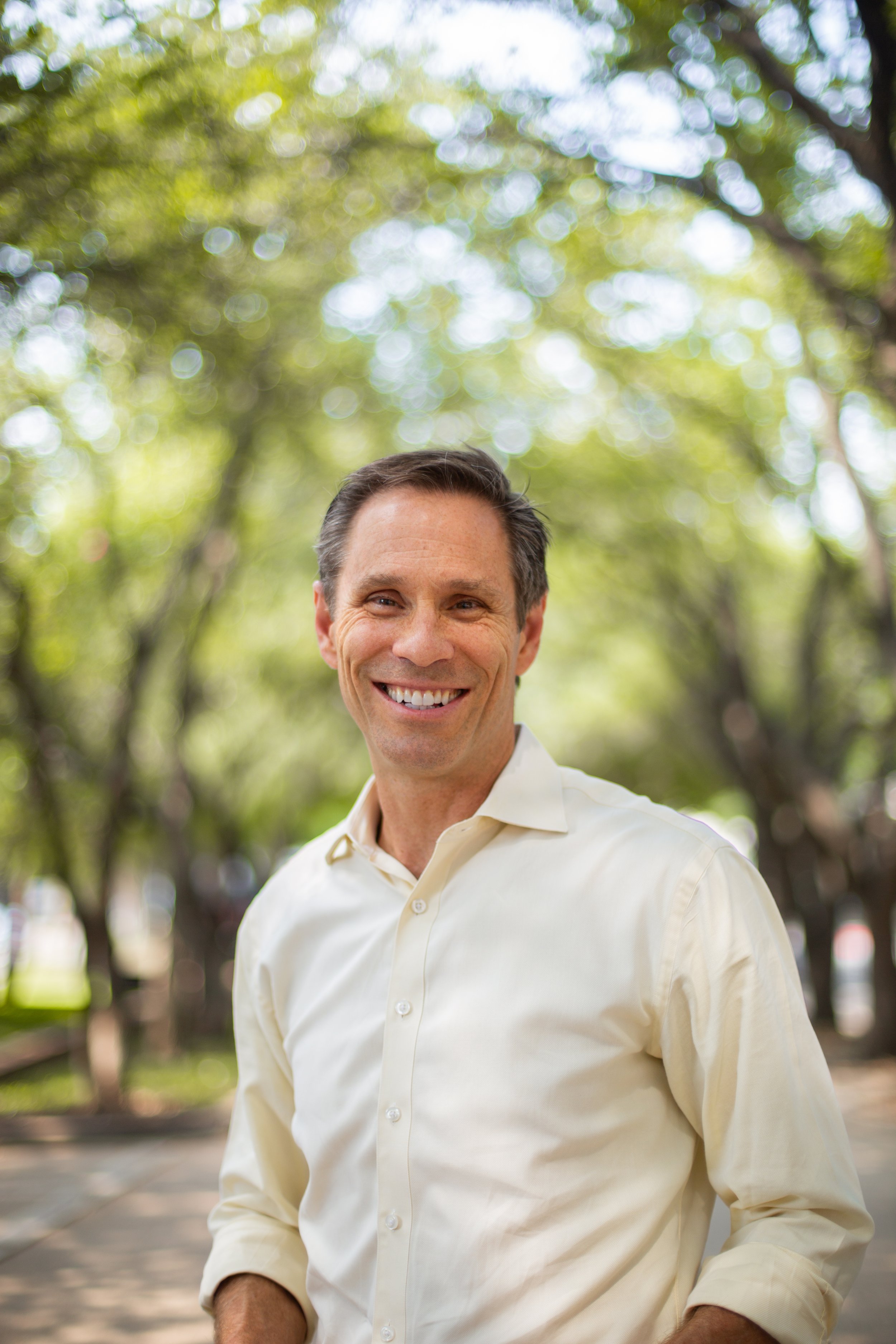
Nathan Johnson
-
Party:
Democrat
-
Status:
Incumbent
-
Branch:
Texas Senate
-
District:
16
-
State:
TX
- Website:
-
Phone:
(469) 712-6589
- Email: