Judith Zaffirini
Branch: Texas Senate District: 21
Additional Information from ATPE
First elected to the Texas Senate in 1986. Current term expires January 2027. Running for re-election in the 2026 Democratic primary.
Endorsed in the 2022 general election by Texas Parent PAC, a pro-public education organization that advocates for adequate and equitable funding of public schools, local control, teacher quality, and the prevention of private school vouchers. She also received their endorsement in the 2020 general election.
Endorsed by the editorial board of the Austin American-Statesman in the 2022 general election. She also received their endorsement in the 2020 general election.
Endorsed by the editorial board of the San Antonio Express-News in the 2020 general election.
Voting records currently not available. Please check back later.
Survey Responses
RESPONSES TO THE 2026 ATPE CANDIDATE SURVEY:
1. If elected, what are your top priorities for Texas public education?Please describe any specific goals or legislative initiatives you would pursue to strengthen the state’s public education system.
My goals for public education are to continue to champion the highest possible funding, including for teacher pay raises and retirement benefits; flexibility to meet local needs that vary by district; special education programs and services for students with physical, emotional, and intellectual disabilities and/or learning disorders; and increasing retention and attendance while reducing drop-outs.
2. Public Education Funding:The 89th Legislature passed an $8 billion school funding bill, HB 2. However, despite years of unanswered “inflationary challenges, a large majority of that funding was earmarked to specific programs and did not supply districts with significant flexible funding, leaving the majority of Texas students in districts with deficit budgets and other significant funding challenges. Do you believe Texas public schools should receive additional funding? If so, how should the state pay for it, and should that funding be earmarked at the state level or provide districts with flexible dollars?
My record speaks for itself, especially as a member of the Senate Finance Committee, because I always have and always will support increased funding for public education. While legislators can specify funding for specific purposes that meet statewide priorities, districts also should have flexible funding to address their local needs and interests.
Funding should come primarily from general revenue and property taxes, supplemented by grants and philanthropy. If legislative actions reduce districts’ revenue from local property taxes, the difference should be paid with general revenue.
Education savings accounts (ESAs) redirect public funds to private or home schools. How do you believe Texas should fund public schools, traditional and charter, alongside ESA vouchers? How should ESA spending be held accountable to taxpayers?
I have a 100 percent voting record against school vouchers by any name. Years ago when the Republican Lieutenant Governor had the votes (mostly Republican) to pass vouchers but (fortunately) delayed the vote by one day, I developed the plan for the remaining Democrats to kill the bill. This included writing the letters that resulted in the failure.
When state money is appropriated for non-public schools, recipients should be held to the same requirements and standards, including for special education programs, inclusive admission policies, accountability, and transparency.
Under HB 2, passed in 2025, all educators in core content courses (math, English, science, and social studies) must be certified by 2030. While this is a good start, more can and should be done to ensure high-quality teachers continue to enter the classroom. What are your suggestions to improve the quality of the new teacher pipeline?
Teachers are the best source of information, recommendations, and feedback about how to ensure high-quality teachers continue to enter the classroom. We must listen to them and benefit from their advice, insight, and experience.
My suggestions for improving the quality of the new teacher pipeline include providing financial aid for other members of the education team to pursue their higher education and become certified; establishing and improving teacher residency, apprenticeship, and mentoring programs; providing continuing education (training) programs to facilitate certification for teachers; ensure retention such as by increasing teacher salaries and retirement benefits and improving working conditions, reducing red tape, and paperwork; and supporting innovative programs to impact high-quality preparation and support of those seeking certification.
The 89th Legislature passed legislation creating a new mechanism to provide only classroom teachers with tiered raises based on early years of service and their district’s student enrollment. While the raises were significant, they did not apply to all campus educators, and the program created a significant negative funding stream at the district level due to unfunded increased costs for non-salary compensation tied to payroll, such as TRS retirement contributions. Do you support a state-funded across-the-board pay raise for all Texas educators? How would you ensure that compensation keeps pace with inflation and remains competitive with other professions?
Yes. I support a state-funded across-the-board pay raise for all Texas educators and continued raises to ensure compensation keeps pace with inflation and remains competitive with other professions. Because this would be accomplished through legislation, the key is to elect legislators who commit to vote toward this goal. I do.
6. Educator Health Care:The high cost of health insurance for active and retired educators continues to reduce take-home pay, with educators shouldering the vast majority of their ever-increasing heath care costs. How would you address the affordability and sustainability of educator health care, particularly the TRS-ActiveCare and TRS-Care programs?
I would continue to introduce legislation and to vote for legislation that addresses the affordability and sustainability of educator health care, particularly the TRS-ActiveCare and TRS-Care programs. This requires increased state funding to ensure active and retired teachers have the health benefits they deserve and do not have to pay an exorbitant part of their health care. It also requires improved consumer education programs and efficient administration.
I would continue to oppose any unjustified effort to increase the cost of premiums, reduce the number and type of benefits, or decrease state funding.
Do you believe the Teacher Retirement System of Texas (TRS) should remain a defined-benefit pension plan for all current and future members? If not, what is your plan to provide a secure retirement for Texas educators, particularly considering that state law has been set up such that most districts do not participate in Social Security?
Yes. I will continue my record of supporting a defined-benefit pension plan for current and future members of TRS.
8. Accountability and Assessment Reform:The Legislature has passed a new “through-year” multi-test model under HB 8. What role should standardized testing play in evaluating students, teachers, and schools? Should test results continue to determine A–F accountability ratings or teacher pay?
Standardized assessments should be one tool among many to measure student learning and growth, but they should not be the determinant of a student’s success, a teacher’s effectiveness, or a school’s quality. HB 8’s move toward a through-year, multi-test model reflects the Legislature’s intent to reduce the high-stakes nature of a single exam and to provide educators with timely, actionable information. Test results can inform accountability systems, but they should be balanced with multiple measures, including student growth, classroom performance, and local context. Accountability systems must support improvement, not punish schools, teachers, or students based on a single data point.
9. Parental Rights and Community Voice:Recent legislative debates have focused on “parental rights” in education. In your view, what is the appropriate balance between accommodating the often conflicting wishes of individual parents while maintaining policies that reflect the broader community’s educational priorities and still providing consistency and an appropriate level of professional deference to educators?
As a mother and grandmother I understand the challenge of balancing parental rights and perspectives with the appropriate level of professional deference to educators. When the preferences of a few parents conflict with the broader community’s educational priorities and the professional recommendations or practices of educators, public forums are crucial. All should be heard, but decisions should be made that serve the best interests and needs of students.
10. School Safety:HB 3 (2023) imposed new school safety requirements but did not fully fund them. Although the 89th Legislature increased the School Safety Allotment, many districts continue to face substantial unfunded staffing and facility costs associated with school safety laws. How would you make schools safer and ensure the state provides adequate funding to meet safety mandates?
Unfunded state mandates are unfair.
I will continue to advocate for the state to fully fund all school safety mandates so school districts are not forced to divert resources away from classrooms, teachers, and student services.
Making schools safer requires a comprehensive approach that includes funding for trained school safety personnel, mental health supports, secure facilities, and evidence-based prevention strategies. The legislature should provide sustainable, ongoing funding for these needs through the School Safety Allotment and other targeted appropriations, rather than relying on one-time grants or shifting costs to local taxpayers.
I also believe the state must work in partnership with local school districts, educators, and law enforcement to ensure safety policies are practical, flexible, and tailored to local needs. School safety should enhance student well-being and learning, not create additional administrative burdens or unfunded obligations. If the Legislature mandates new safety requirements, it has a responsibility to fully fund them.
What do you believe is the proper role of the State Board of Education, the Texas Education Agency, and local school districts in setting curriculum standards and selecting instructional materials?
The State Board of Education has an important role in setting clear, high-quality statewide curriculum standards that ensure all Texas students, regardless of where they live, are held to the same academic expectations. The Texas Education Agency should focus on implementing those standards faithfully, providing support and guidance to districts, and ensuring accountability is fair, transparent, and focused on continuous improvement rather than punishment.
At the same time, local school districts, educators, and parents must retain meaningful authority to select instructional materials and design classroom instruction that reflects local needs, student populations, and community values. Teachers are closest to students and should have flexibility to use materials that best support learning, as long as they align with state standards.
The state should set the floor, not the ceiling. Strong statewide standards promote equity and consistency, but local control is essential for innovation, responsiveness, and trust in public education. Curriculum decisions work best when state oversight is balanced with professional educator judgment and meaningful local feedback.
State law allows educators and other public employees to voluntarily join professional associations such as ATPE and have membership dues deducted from their paychecks at no cost to taxpayers. Do you support or oppose allowing public employees to continue exercising this right? Why or why not?
I strongly support allowing public employees, including ATPE, to have membership dues deducted from their paychecks at no cost to taxpayers. This is consistent with my championing worker protections, transparency in government, general civil rights, and the importance of unions in advocating for their members.
Did not respond to the 2024 or 2022 ATPE Candidate Survey.
BELOW ARE THE CANDIDATE'S RESPONSES TO THE 2020 ATPE CANDIDATE SURVEY:
1. If elected, what will be your top priorities for public education?
My top priorities will include defending public education from budget cuts and supporting teachers before, during, and after their careers by recruiting the best, paying them better, and improving their retirement benefits.
2. What are your recommendations for funding public education, including securing the necessary revenue to sustain the improvements made by House Bill 3 in 2019? Do you believe additional funding is needed?
We should sustain the funding added via House Bill 3, including by using general revenue or tapping the rainy day fund. Failing that, we should consider new sources of revenue to ensure our schools are funded adequately. Yes. I believe additional funding is needed.
3. How would you address the challenge of rising healthcare costs facing Texas educators and ensure that active and retired educators have access to affordable healthcare?
I have voted consistently for TRS and TRS Care and will continue to do so. The state should increase its share of funding to ensure that active and retired educators have access to affordable healthcare.
4. Do you believe the Teacher Retirement System (TRS) should be maintained as a traditional defined benefit pension plan for all future, current, and retired educators, or do you support converting TRS to a defined contribution plan that is more like a 401(k) plan, in which future benefits are not guaranteed?
I believe TRS should be maintained as a traditional defined benefit pension plan for all future, current, and retired educators.
5. What do you feel is the proper role of standardized testing in Texas's public education system? For instance, should student test scores be used for school accountability purposes, for evaluating teachers, for measuring student progress, etc.?
Generally, I oppose high-stakes standardized testing and specifically oppose administering the STAAR during the pandemic. Testing has a role, but I do not believe it should be the primary factor in assessing our students, teachers, and schools.
6. To what extent should student performance determine teacher pay?
Minimally, if at all.
7. Would you vote to create any type of voucher, tax credit, scholarship, education savings account, or other program aimed at paying for students, including any subpopulation of students, to attend non-public K-12 schools, such as private or home schools?
No.
8. State law allows educators and other public employees to voluntarily choose to join professional associations such as ATPE and have membership dues deducted from their paychecks at no cost to taxpayers. Do you support or oppose letting all public employees continue to exercise this right?
Support.
9. What role, if any, should charter schools have in the public education system, and do you feel the number of charter schools operating in Texas should be reduced or expanded?
For-profit charter schools have no place in our Texas education system. Non-profit charter schools should be only a last resort when school districts fail to meet their responsibility to educate all children.
10. Recent legislation has made it possible for school districts to exempt themselves from many state laws (e.g., class-size limits, requirements for hiring certified teachers, minimum salary schedules, school calendar restrictions, etc.) by partnering with outside entities, allowing campuses to be managed by a charter school operator, or becoming part of a District of Innovation, for example. Do you agree with this type of deregulation of public schools, and how should such non-traditional schools be governed?
I oppose any deregulation of public schools that could reduce the quality of instruction provided to Texas children. Any limited deregulation allowed should be scrutinized strictly.
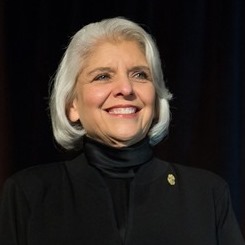
Judith Zaffirini
-
Party:
Democrat
-
Branch:
Texas Senate
-
District:
21
-
Address:
PO Box 627
City:LAREDO
State:TX
- Website:
- Email: