Jon Rosenthal*
Branch: Texas House District: 135 Status: incumbent
Additional Information from ATPE
First elected to the Texas House in 2018. Current term expires January 2027.
*Rosenthal is running for Texas Railroad Commissioner and is not seeking re-election in the 2026 Texas House race.
Endorsed in the 2022 general election by Texas Parent PAC, a pro-public education organization that advocates for adequate and equitable funding of public schools, local control, teacher quality, and the prevention of private school vouchers.
Endorsed by the editorial board of the Houston Chronicle in the 2022 general election. He also received their endorsement in the 2020 general election.
In the 2018 election, he was recommended favorably by Texans for Public Education, a grassroots educators' group that researched and rated candidates in the 2018 election based on their stances toward public schools.
Voting records currently not available. Please check back later.
Survey Responses
Did not respond to the 2024 or 2022 candidate survey.
BELOW ARE THE CANDIDATE'S RESPONSES TO THE 2020 ATPE CANDIDATE SURVEY:
1. If elected, what will be your top priorities for public education?
1. First and foremost we'll have quite a job to do just trying to keep the gains we fought for last session in the face of a massive budget shortfall. 2. Next we must continue to fight to increase funding for both public education and also to help TRS with a long-overdue cost of living increase plus reducing healthcare and insurance costs (Medicaid Expansion can help with healthcare costs) 3. My long term goal is to "repeal and replace" the STAAR test. First steps are to decouple it from school accountability and also further increase pilot programs for alternative testing and evaluation systems.
2. What are your recommendations for funding public education, including securing the necessary revenue to sustain the improvements made by House Bill 3 in 2019? Do you believe additional funding is needed?
As in the previous question, this is my first priority for public education and I believe we are in for a fight! My recommendations are similar to last cycle - we need to secure the revenue to both sustain the gains from the 86th session and also to further improve funding. I believe good places to start would be as follows: First - Close the "Equal and Uniform" loophole for corporate property taxes. The big corporations should pay a fair share, just like you and I. Second - require transparency on commercial property values, selling prices must be open for tax assessment purposes. Third - we should expand Medicaid in Texas (it's not directly tied to school finance, but would lower the healthcare financial burdens on teachers and retirees). Fourth - legalize marijuana for all uses including recreational with appropriate regulations and taxing. Fifth - reduce (or better yet eliminate) Texas spending on border security since it is Federal Gov't responsibility
3. How would you address the challenge of rising healthcare costs facing Texas educators and ensure that active and retired educators have access to affordable healthcare?
Funny you should ask! I've already mentioned the Medicaid expansion a couple of times so that's a big first step. Second step should be to get a better deal on healthcare for public education workers as a GROUP (all the workers and ISDs in Texas included). Use the massive purchasing power of the Texas public education system as a whole to drive for better coverage at lower rates. This should be done using the WHOLE system, not shopped by individual ISDs (if that is indeed how it's currently managed)
4. Do you believe the Teacher Retirement System (TRS) should be maintained as a traditional defined benefit pension plan for all future, current, and retired educators, or do you support converting TRS to a defined contribution plan that is more like a 401(k) plan, in which future benefits are not guaranteed?
Keep the defined benefit pension plan for sure - AND also allow teachers who participated in the Social Security system to keep those benefits as well. It strikes me as patently unfair to not allow people to keep the savings in all systems they participate in and contribute to (sorry for ending with a preposition!)
5. What do you feel is the proper role of standardized testing in Texas's public education system? For instance, should student test scores be used for school accountability purposes, for evaluating teachers, for measuring student progress, etc.?
How much time do you have? I've worked on this at length because I believe what we are doing now with STAAR and the accountability and teacher evaluations is detrimental to the point of being criminal. And please be advised that I'm a lifelong Mechanical Engineer by trade so I believe in TESTING! You should hear me go on about COVID testing (but that's another topic). Apologies for digressing..... First we need to get rid of STAAR and replace it with a system that is *valid* for measuring student progress AND level. That's a very basic first step. Multiple studies show that the current STAAR system is discriminatory and also almost entirely divorced from the in-class experience. Using a deeply flawed and ineffective instrument for any measurement is a huge problem but then tying those flawed results to school accountability, district financing, and teacher performance is an absolute disaster that not only adversely affects how our kids learn but is also traumatic and damaging for students and teachers and staff alike. The current system needs a dramatic and complete overhaul. Modern testing systems allow for real-time results available in the classroom, and some of the more advanced systems are designed with questions structured to help teachers understand how students process certain types of information and logic - in real time - in the classroom. Testing can be a very valuable tool for measuring student progress and checking for level proficiency, and it can also be a helpful resource to help teachers work more effectively with students on an individual level. Now, attaching test scores to school accountability or teacher pay? To me, this is currently managed in exactly the reverse of what logic dictates. If a school or an ISD (or a class) is struggling then the current system reduces resource allocation. Who in the world thinks you can improve education performance by TAKING AWAY resources? This boggles my mind. How about instead we allocate EXTRA resources to struggling schools and do things like offer teacher stipends to encourage more talented and motivated teachers to move in to the most challenged environments?
6. To what extent should student performance determine teacher pay?
To me this is kind of a ridiculous question since there are so many moving parts to this dynamic, starting with the lack of a VALID, equitable, and consistent measurement of "student performance". Here's one basic truth on evaluating teachers: the people on campus know who the talented and motivated and effective teachers are. It becomes obvious very quickly. Just go to a campus and ask around. Teacher pay should be determined on multiple criteria (certainly including seniority!), and legislators should be working with classroom teachers and school administrators to develop those criteria. After all, who is better at figuring out how to evaluate a teacher than other teachers?
7. Would you vote to create any type of voucher, tax credit, scholarship, education savings account, or other program aimed at paying for students, including any subpopulation of students, to attend non-public K-12 schools, such as private or home schools?
No. Nope. No way.
8. State law allows educators and other public employees to voluntarily choose to join professional associations such as ATPE and have membership dues deducted from their paychecks at no cost to taxpayers. Do you support or oppose letting all public employees continue to exercise this right?
I support allowing employees to choose.
9. What role, if any, should charter schools have in the public education system, and do you feel the number of charter schools operating in Texas should be reduced or expanded?
I've come to believe that not all charter operations are inherently evil, but some certainly are using our system for profit and in the process they are disadvantaging our overall public education system. The original intent as I understand it was for charters to be vehicles to test innovations in techniques and methods, and that would be ok if it were always (or usually) true - but that's often not the case. Also, Charters are currently funded differently and are not subject to the same rules and accountability as ISDs. With today's current budget crunch there is NO WAY that any new charters should be approved until we re-stabilize our economy and budget, and even then I believe we need to change the rules to be more equitable and prevent profiteering by charter organizations. The charters that are draining resources away from traditional public schools while producing substandard results should be eliminated or restructured and all should be accountable to the communities the way that traditional public schools are.
10. Recent legislation has made it possible for school districts to exempt themselves from many state laws (e.g., class-size limits, requirements for hiring certified teachers, minimum salary schedules, school calendar restrictions, etc.) by partnering with outside entities, allowing campuses to be managed by a charter school operator, or becoming part of a District of Innovation, for example. Do you agree with this type of deregulation of public schools, and how should such non-traditional schools be governed?
I disagree with this type of deregulation.
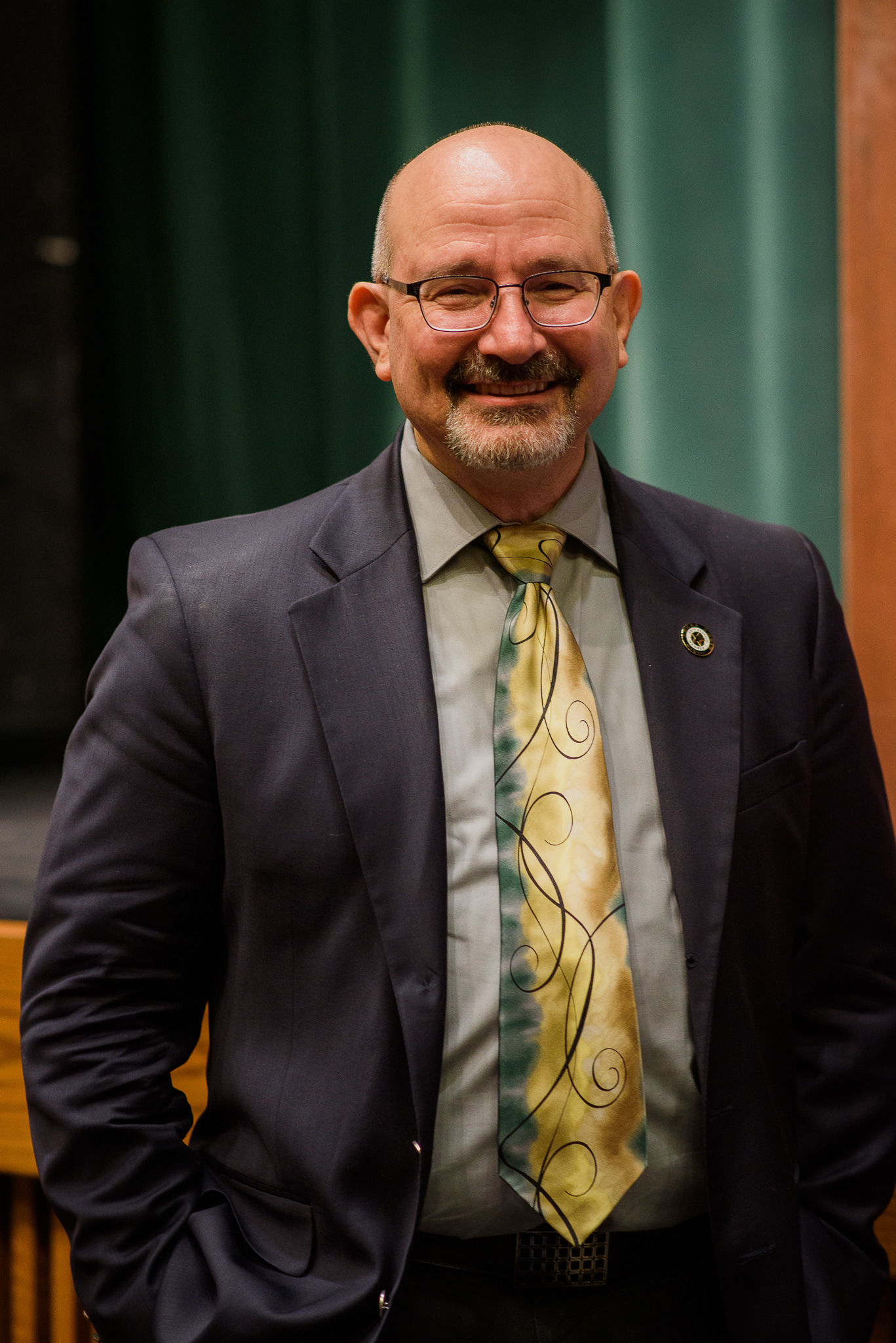
Jon Rosenthal*
-
Party:
Democrat
-
Status:
incumbent
-
Branch:
Texas House
-
District:
135
-
Address:
8624 Hwy 6 N. 340
City:Houston
State:TX
- Website:
-
Phone:
(832) 876-7475
- Email: