John Bucy III
Branch: Texas House District: 136 Status: incumbent
Additional Information from ATPE
First elected to the Texas House in 2018. Current term expires January 2027. Running for re-election; ran unopposed in the Democratic primary and will be on the November 2026 general election ballot.
Endorsed in the 2022 general election by Texas Parent PAC, a pro-public education organization that advocates for adequate and equitable funding of public schools, local control, teacher quality, and the prevention of private school vouchers. He also received the group's endorsement in the 2020 and 2018 elections.
Endorsed by the editorial board of the Austin American-Statesman in the 2022 general election. He also received their endorsement in the 2020 general election.
In the 2018 election, he was recommended favorably by Texans for Public Education, a grassroots educators' group that researched and rated candidates in the 2018 election based on their stances toward public schools.
Voting records currently not available. Please check back later.
Survey Responses
HAS NOT RESPONDED TO THE 2026 ATPE CANDIDATE SURVEY.RESPONSES TO THE 2024 ATPE CANDIDATE SURVEY:
1. If elected, what are your top priorities for public education?
1) Maintaining and increasing funding for our schools including changing to an enrollment based funding model, 2) TRS and TRS-Care, 3) Better funding for counselors and special education support staff, 4) Arts education and Civics education, and 5) Maintaining standards for smaller class sizes and similar best practices. Every session should be a public education session in that we need to continue to adjust the formulas for funding to ensure we are meeting the need. We need to increase funding for pre-K, early childhood literacy, and special education to ensure we are meeting the needs of all of our students. Similarly, I want to work to reform the FBA/BIP process to ensure we are meeting students' needs instead of providing hurdles to families seeking support. I also believe we also need to ensure those employees who were not included in H.B. 3 such as bus drivers, cafeteria workers, and janitors, see an increase in pay. Additionally, we must continue to assess the need for and provide regular cost of living adjustments for TRS pensioners to ensure a stable and secure retirement for our retired educators. I support increasing the number of Licensed Specialists in School Psychology on campuses, especially at the middle and high school level. With respect to Arts and Civics, I believe each of these areas benefit our students tremendously. Last, I am committed to upholding and expanding best practices that are beneficial to our students and teachers in the classroom, including small classroom sizes, modern classrooms that are well supplied, access to technology, teacher training and mentorship programs, school counselors and academic coaches, and similar.
2. Voucher programs take many forms (tax credits, scholarships, education savings accounts, etc.) and are either universal or aimed at specific subpopulations (special education students, low-income students, students attending schools with poor A-F accountability ratings, etc.). Would you vote to create a voucher program of any type to pay for students to attend non-public K-12 schools, such as private or home schools?
No. Public tax dollars should never be used for private schools.
3. In 2023, the Texas Legislature passed House Bill (HB) 3 requiring a number of new school safety measures. However, many believe the Legislature did not adequately increase funding to cover the cost of the mandates in HB 3 or other locally adopted school safety measures. How would you work to make schools safer and ensure such initiatives are properly funded?
Any new requirements must come with funding and any current gaps must be closed by creating or increasing allotments to cover them. While I support hardening and other measures, I also believe it is critically important that we make significant investments in mental health services, including hiring more counselors, Licensed Specialists in School Psychology, and interventionalists, as well as focusing on conflict resolution, mindfulness, and other socio-emotional approaches. Similarly, I believe we must increase education and initiatives on bullying, suicide prevention, and leakage – including how to identify it and respond to mitigate threats.
4. Despite a record-breaking surplus of $38 billion during the 2023 legislative session, school funding formulas were not increased to keep pace with inflation since they were last adjusted in 2019. Do you believe Texas public schools should receive additional funding? If so, how should the state pay for it?
Yes, we need to dramatically increase funding for our public schools. We must raise the basic allotment and move to an enrollment based funding model. I believe every session should be a public education session -- that is, we need to assess the formulas every session to better meet the need. In addition, we need to continue to increase funding for Pre-K, early childhood literacy, and special education to ensure all of our students are being served. Additional funding isn’t a question of revenue, but of what we choose to prioritize. In order to secure more revenue we need to close the property tax loopholes for corporate and commercial properties and look at increasing things like the margins tax. We would also legalize, regulate, and tax cannabis in a manner similar to alcohol as well as look at revenues to be derived from legalized sports betting and casinos.
5. Texas has faced growing teacher shortages in recent years, with many schools hiring uncertified teachers to fill the gaps. How would you work to ensure Texas public schools have an adequate number of trained and certified teachers?
I believe paying fair wages, offering competitive benefits, and ensuring mentorship and support are critical in attracting and retaining quality educators, which in turn benefits our children. At the same time, we should expand student loan forgiveness and other inducements. We also need to ensure class sizes are small, that classrooms are well supplied, and that time for lesson-planning is not replaced with administrative tasks so as to increase retention and decrease burnout. Similarly, we need to reform standardized testing and ensure fair evaluations and standards as well as conditions that are conducive to teaching and learning. Additionally, we should remove certain regulations that discourage retired teachers from going back into the profession or serving as substitutes to help cover the gap in the short term that we currently have in terms of workforce.
6. Inadequate compensation hampers the recruitment and retention of high-quality educators. Do you support a state-funded across-the-board pay raise for all Texas educators?
Yes. I support this. In addition, when any raise is provided it cannot be offset with changes to healthcare, benefits, or retirements.
7. The high cost of health insurance available to educators is a significant factor decreasing their take-home pay. How would you address the challenge of rising health care costs facing Texas educators and ensure access to affordable health care?
I have filed legislation to expand Medicaid and allow the people of Texas to vote on it every session I have been in the legislature. Expanding Medicaid would provide 1.5 million Texans with access to healthcare and save lives in addition to lowering all of our healthcare costs by bringing $110 Billion of our tax dollars back to Texas to shore up our healthcare infrastructure, lower expenditures related to uncompensated care, and reduce our health insurance premiums. I support increasing teacher pay as well as regular COLAs for retirees to ensure that healthcare costs do not outweigh income or annuities. Similarly, I intend to file legislation around TRS-Care next session in order to make healthcare more affordable and accessible for our current and retired educators.
8. What do you feel is the proper role of standardized testing in the Texas public education system? For instance, should student test scores be used as a metric in determining teacher pay, school accountability ratings, evaluating teachers, measuring student progress, etc.?
We need to reduce our over-reliance on high-stakes testing and focus on teaching and preparing our students to enter the workforce or to continue their education. Tests could have some usefulness as a diagnostic tool to see where students are at and where they need help, but should not factor in with regards to teacher pay or similar. I support abolishing any standardized tests that go beyond the minimums required by federal standards – I have filed legislation to that effect in the past and plan to do so again next session.
9. In your opinion, what is the proper balance between accommodating an individual parent’s or student’s wishes and the taxpaying community’s interest in directing and maintaining an optimal educational environment for the student population as a whole?
While it’s critical to maintain an optimal education environment for the student population as a whole as well as the educators and staff who support them, we also need to ensure our schools have the systems and resources in place to meet the needs of individual students. The state has a larger role to play here especially in the funding side. Our student body is not a monolith and we still have ways to go to ensure curriculum and textbooks are inclusive and culturally competent, that we have equitable extracurricular and enrichment opportunities, and that students in special education are getting the supports and services they are legally entitled to and need to succeed. Similarly, when it comes to sex education and public health data collection, I support an opt-out model, not an opt-in model.
10. Do you believe the Teacher Retirement System (TRS) should be maintained as a traditional defined-benefit pension plan for all future, current, and retired educators, or do you support converting TRS to a defined-contribution structure that is more like a 401(k) plan, in which future benefits are not guaranteed?
TRS should be maintained as a traditional defined benefit for all future, current, and retired educators. In addition, the state contribution rate must be increased to the point where the actuarial soundness of the system never falters.
11. State law allows educators and other public employees to voluntarily choose to join professional associations such as ATPE and have membership dues deducted from their paychecks at no cost to taxpayers. Do you support or oppose letting all public employees continue to exercise this right?
I fully support this. I support the rights of workers to organize for fair pay and benefits and am a proud union member of the Texas State Employees Union. I believe people should be treated with respect and dignity in the workplace.
RESPONSES TO THE 2022 ATPE CANDIDATE SURVEY:
1. If elected, what will be your top priorities for public education?
1) Maintaining and increasing funding for our schools, 2) TRS and TRS-Care, 3) Better funding for counselors and special education support staff, 4) Arts education and Civics education, and 5) Maintaining standards for smaller class sizes and similar best practices. Every session should be a public education session in that we need to continue to adjust the formulas for funding to ensure we are meeting the need. We need to increase funding for pre-K, early childhood literacy, and special education to ensure we are meeting the needs of all of our students. Similarly, I want to work to reform the FBA/BIP process to ensure we are meeting students' needs instead of providing hurdles to families seeking support. I also believe we also need to ensure those employees who were not included in H.B. 3 such as bus drivers, cafeteria workers, and janitors, see an increase in pay. Additionally, I am working with relevant stakeholders to again file legislation to study and implement a cost-of-living adjustment for TRS pensioners to ensure a stable and secure retirement for our retired educators. I support increasing the number of Licensed Specialists in School Psychology on campuses, especially at the middle and high school level. With respect to Arts and Civics, I believe each of these areas benefit our students tremendously. Last, I am committed to upholding and expanding best practices that are beneficial to our students and teachers in the classroom, including small classroom sizes, modern classrooms that are well supplied, access to technology, teacher training and mentorship programs, school counselors and academic coaches, and similar.
2. What are your recommendations for funding public education, including securing the necessary revenue to sustain the improvements made by House Bill 3 in 2019? Do you believe additional funding is needed?
It's important that we continue to increase funding for our public schools. I believe every session should be a public education session -- that is, we need to assess the formulas every session to better meet the need. In addition, we need to continue to increase funding for Pre-K, early childhood literacy, and special education to ensure all of our students are being served. Additional funding isn’t a question of revenue, but of what we choose to prioritize. In order to secure more revenue, we need to close the property tax loopholes for corporate and commercial properties. Instead of passing the buck onto local homeowners it is imperative that everyone pay their fair share so we can adequately fund our schools.
3. How would you address the challenge of rising health care costs facing Texas educators and ensure that active and retired educators have access to affordable health care?
I have filed legislation to expand Medicaid and allow the people of Texas to vote on it every session I have been in the legislature. Expanding Medicaid would provide 1.5 million Texans with access to healthcare and save lives in addition to lowering all of our healthcare costs by bringing $110 Billion of our tax dollars back to Texas to shore up our healthcare infrastructure, lower expenditures related to uncompensated care, and reduce our health insurance premiums. I support increasing teacher pay as well as a COLA for retirees to ensure that healthcare costs do not outweigh income or annuities. Similarly, I intend to file legislation around TRS-Care next session in order to make healthcare more affordable and accessible for our current and retired educators.
4. Do you believe the Teacher Retirement System (TRS) should be maintained as a traditional defined benefit pension plan for all future, current, and retired educators, or do you support converting TRS to a defined contribution plan that is more like a 401(k) plan, in which future benefits are not guaranteed?
TRS should be maintained as a traditional defined benefit for all future, current, and retired educators. In addition, the state contribution rate must be increased to the point where the actuarial soundness of the system never falters.
5. What do you feel is the proper role of standardized testing in the Texas public education system? For instance, should student test scores be used for teacher pay, school accountability ratings, evaluating teachers, measuring student progress, etc.?
We need to reduce our over-reliance on high-stakes testing and focus on teaching and preparing our students to enter the workforce or to continue their education. Tests could have some usefulness as a diagnostic tool to see where students are at and where they need help, but should not factor in with regards to teacher pay or similar. I support abolishing any standardized tests that go beyond the minimums required by federal standards – I have filed legislation to that effect in the past and plan to do so again next session.
6. Would you vote to create any type of voucher, tax credit, scholarship, education savings account, or other program aimed at paying for students, including any subpopulation of students, to attend non-public K-12 schools, such as private or home schools?
No. Public tax dollars should never be used for private schools.
7. State law allows educators and other public employees to voluntarily choose to join professional associations such as ATPE and have membership dues deducted from their paychecks at no cost to taxpayers. Do you support or oppose letting all public employees continue to exercise this right?
I fully support this. I support the rights of workers to organize for fair pay and benefits and am a proud union member of the Texas State Employees Union. I believe people should be treated with respect and dignity in the workplace.
8. What role, if any, should charter schools have in the public education system, and do you feel the number of charter schools operating in Texas should be reduced or expanded?
When charter schools were created, they were meant to be laboratories focused on innovation for the sole purpose of improving public education. Many schools have stayed true to this mission, however, there needs to be a more collaborative approach and we need to ensure that these best practices are being shared. In addition, I support legislation that ensures transparency and accountability just as with traditional public schools. Similarly, I believe the TEA must do its job in terms of collecting relevant data on performance and enforcing regulations.
9. How much freedom should school districts have to make decisions during disease outbreaks, such as requiring face coverings and immunizations or transitioning to remote instruction?
I am a firm believer in local control and following the science. Texas school districts and their democratically-elected school boards should have the freedom and authority to keep all of our children safe during disease outbreaks.
10. What do you believe is the proper role of virtual education within the public education system? Do you believe full-time virtual education should be expanded, and if so, under what circumstances?
I do not believe expanding full-time virtual education writ large is what is best for Texas’ students. There may be some circumstances on individual levels where this is what is best for a student, and that could be accommodated by their local school district, but we have seen the effects of learning loss largely associated with not being in the classroom as well as the inability of some students to get the support and services they need. Any criterion and decision on this matter should be done at the local level, with individual school districts able to create the criterion and parameters of such a program. I would not support a state-wide virtual school.
11. What do you feel should be the state’s role (versus the role of school districts or individual educators) in decisions about public school curriculum and instructional materials?
The State Board of Education sets the TEKS, and it is up to individual school districts and individual educators to create lesson plans and provide instructional materials in line with those standards. I do not believe the Legislature should undermine critical or creative thinking, discussions of hard topics related to race or history or current events, or otherwise pander toward a manufactured political problem at the expense of our children. In short, we should let teachers teach and let parents parent.
12. The COVID-19 pandemic and additional instructional support needed to remediate students’ learning losses have placed additional strain on public schools’ staffing needs. How would you work to ensure classrooms are appropriately staffed, teachers’ workloads are manageable, and planning time is not sacrificed amid these challenges?
Learning loss and the strain on our education professional have been the two biggest problems caused and exacerbated by COVID-19. We must use the Economic Stabilization Fund, often referred to instead as the Rainy Day Fund, to inject additional funds into our public schools to ensure the resources to address staffing needs as well as increase academic counseling, support services, and otherwise to combat learning loss. This fund currently has over $10 Billion in it and some of that money must be used to address urgent needs while we also work to identify and implement long-term funding solutions, including a more equitable tax system and creating new revenue streams.
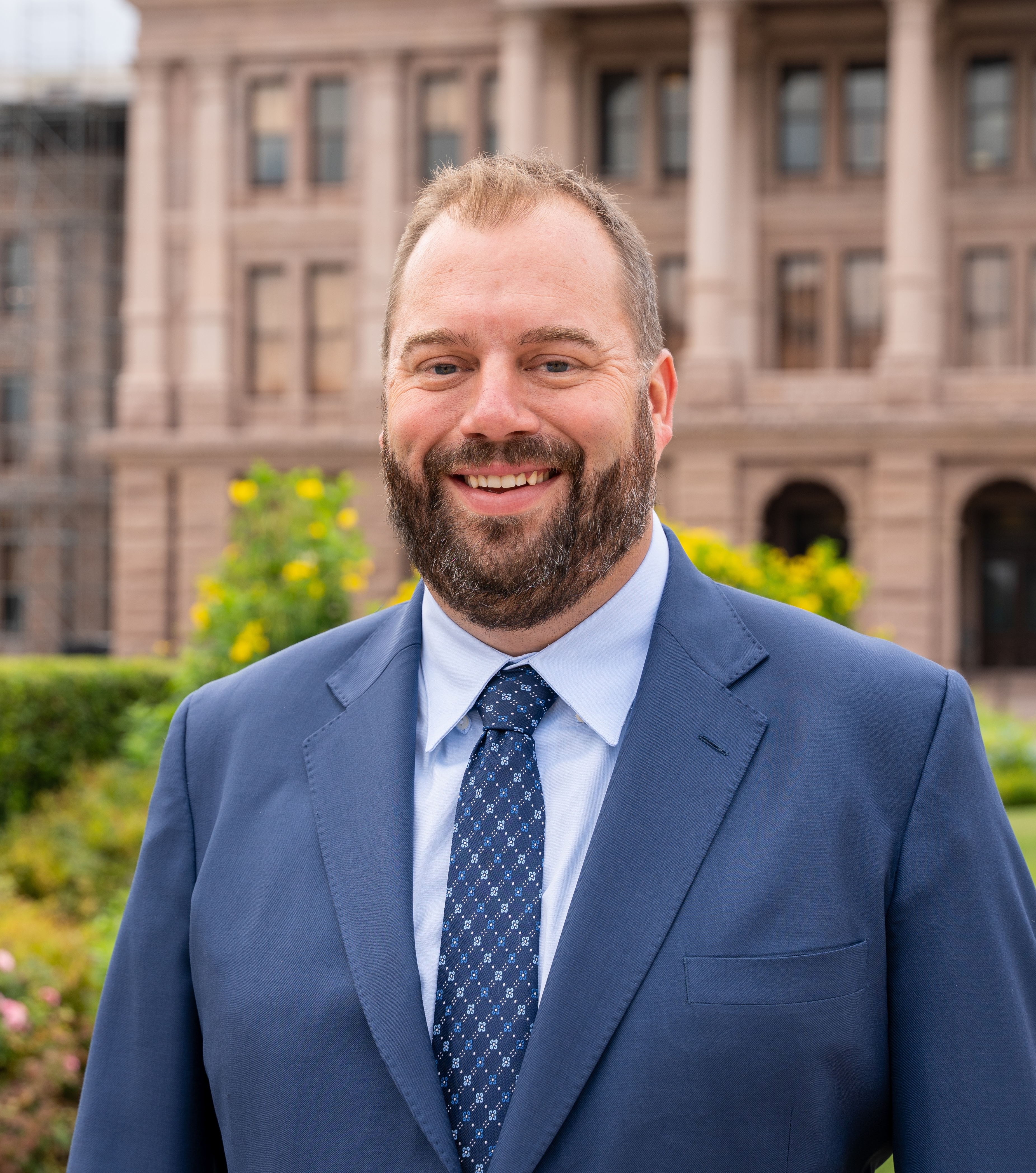
John Bucy III
-
Party:
Democrat
-
Status:
incumbent
-
Branch:
Texas House
-
District:
136
-
Address:
P.O. Box 536
City:Austin
State:TX
- Website:
-
Phone:
(512) 680-3762
- Email: