Hubert Vo**
Branch: Texas House District: 149
Additional Information from ATPE
First elected to the Texas House in 2004. Current term expires January 2027.
*Lost his reelection bid for Texas House District 149 in the 2026 Democratic primary election. Vo will not be on the November 2026 general election ballot.
Endorsed by the editorial board of the Houston Chronicle in the 2022 general election. He also received their endorsement in the 2020 general election.
Endorsed in the 2022 general election by Texas Parent PAC, a pro-public education organization that advocates for adequate and equitable funding of public schools, local control, teacher quality and the prevention of private school vouchers. Vo also received the group's endorsement in the 2020, 2016, and 2014 elections.
In the 2018 election, he was recommended favorably by Texans for Public Education, a grassroots educators' group that researched and rated candidates in the 2018 election based on their stances toward public schools.
Recipient of an ATPE Freedom to Teach Award in 2006.
In a prior legislative session, Vo filed legislation at ATPE's request to extend the current 22:1 class-size limit in grades K–4 to include fifth grade.
Voting records currently not available. Please check back later.
Survey Responses
HAS NOT RESPONDED TO THE 2026 ATPE CANDIDATE SURVEY.
Did not respond to the 2024 or 2022 candidate survey.
RESPONSES TO THE 2020 ATPE CANDIDATE SURVEY:
1. If elected, what will be your top priorities for public education?
Education has always been my top priority. Every session I help fight for adequate funding for our schools and to make sure there is equitable funding between our districts. I have also long been an advocate for career and workforce training. My home school district has been a leader in preparing students for whatever they choose to do after graduating from high school.
2. What are your recommendations for funding public education, including securing the necessary revenue to sustain the improvements made by House Bill 3 in 2019? Do you believe additional funding is needed?
I believe that we must put education funding as number one. When we do, that funding will be available.
3. How would you address the challenge of rising healthcare costs facing Texas educators and ensure that active and retired educators have access to affordable healthcare?
Every session I work with several of my colleagues to keep costs down. I just do not want to put more cost on any active or retired teacher. I talk regularly with several retired teachers who have explained to me how heavy a burden it is to pay for higher healthcare costs.
4. Do you believe the Teacher Retirement System (TRS) should be maintained as a traditional defined benefit pension plan for all future, current, and retired educators, or do you support converting TRS to a defined contribution plan that is more like a 401(k) plan, in which future benefits are not guaranteed?
Maintain the defined benefit plan
5. What do you feel is the proper role of standardized testing in Texas's public education system? For instance, should student test scores be used for school accountability purposes, for evaluating teachers, for measuring student progress, etc.?
I favored cutting back on the number of tests while maintaining the ability to evaluate student progress.
6. To what extent should student performance determine teacher pay?
I haven't seen a plan where student performance makes sense in determining teacher pay.
7. Would you vote to create any type of voucher, tax credit, scholarship, education savings account, or other program aimed at paying for students, including any subpopulation of students, to attend non-public K-12 schools, such as private or home schools?
NO, absolutely no
8. State law allows educators and other public employees to voluntarily choose to join professional associations such as ATPE and have membership dues deducted from their paychecks at no cost to taxpayers. Do you support or oppose letting all public employees continue to exercise this right?
I support the right for educators to have dues deducted.
9. What role, if any, should charter schools have in the public education system, and do you feel the number of charter schools operating in Texas should be reduced or expanded?
I favor limiting more expansion of charter schools. I prefer traditional public schools.
10. Recent legislation has made it possible for school districts to exempt themselves from many state laws (e.g., class-size limits, requirements for hiring certified teachers, minimum salary schedules, school calendar restrictions, etc.) by partnering with outside entities, allowing campuses to be managed by a charter school operator, or becoming part of a District of Innovation, for example. Do you agree with this type of deregulation of public schools, and how should such non-traditional schools be governed?
I like the ability of districts to have a little flexibility on a few things but very limited. All non-traditional schools should have to follow the same rules as the other schools.
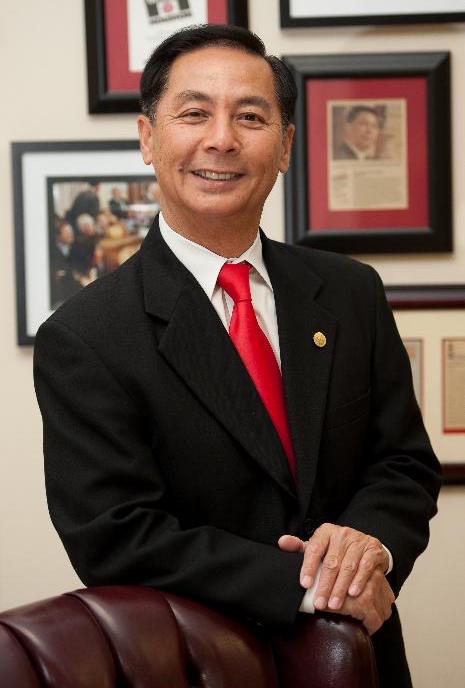
Hubert Vo**
-
Party:
Democrat
-
Branch:
Texas House
-
District:
149
-
Address:
PO Box 2227
City:Alief
State:TX
- Website:
-
Phone:
(281) 564-2984
- Email: