Gary VanDeaver*
Branch: Texas House District: 1 Status: incumbent
Additional Information from ATPE
First elected to the Texas House in 2014. Current term expires January 2027.
*VanDeaver is not seeking re-election in 2026.
Lifelong educator and former superintendent of New Boston ISD. VanDeaver’s wife is a schoolteacher.
Supported by one or more pro-public education organizations in the 2024 Texas primaries, including Texas Parent PAC.
Endorsed in the 2022 general election and Republican primary election by Texas Parent PAC, a pro-public education organization that advocates for adequate and equitable funding of public schools, local control, teacher quality and the prevention of private school vouchers. He also received the group's endorsement in 2016 and 2014.
VanDeaver participated in a nonpartisan candidate forum hosted by the education-focused nonprofit organization Raise Your Hand Texas prior to the 2022 primary election. Watch video of that event here.
VanDeaver was a panelist for ATPE at the Virtual Capitol in 2021, and he participated in a Feb. 2014 candidate forum sponsored by Paris ATPE.
VanDeaver ran unopposed for reelection in 2020
In 2018, VanDeaver was recommended favorably by Texans for Public Education, a grassroots educators' group that researched and rated candidates in the 2018 election based on their stances toward public schools.
In his initial 2014 race, VanDeaver defeated former Rep. George Lavender in the March 2014 Republican primary election.
Voting records currently not available. Please check back later.
Survey Responses
RESPONSES TO THE 2024 ATPE CANDIDATE SURVEY:1. If elected, what are your top priorities for public education?
1. Increase in Teacher Pay
2. Increase funding through the basic allotment
3. Provide funding for school safety particularly the unfunded mandates passed in the 88th
2. Voucher programs take many forms (tax credits, scholarships, education savings accounts, etc.) and are either universal or aimed at specific subpopulations (special education students, low-income students, students attending schools with poor A-F accountability ratings, etc.). Would you vote to create a voucher program of any type to pay for students to attend non-public K-12 schools, such as private or home schools?
No. I am totally opposed to any form of voucher
3. In 2023, the Texas Legislature passed House Bill (HB) 3 requiring a number of new school safety measures. However, many believe the Legislature did not adequately increase funding to cover the cost of the mandates in HB 3 or other locally adopted school safety measures. How would you work to make schools safer and ensure such initiatives are properly funded?
I believe the best way to fund school safety is by increasing the safety allotment to a level to provide schools with the ability to implement measures to make schools safer.
4. Despite a record-breaking surplus of $38 billion during the 2023 legislative session, school funding formulas were not increased to keep pace with inflation since they were last adjusted in 2019. Do you believe Texas public schools should receive additional funding? If so, how should the state pay for it?
Yes, I believe school funding should be increased. I believe there were some really good provisions in HB1 in the 4th special session but unfortunately, the house was not given the opportunity to vote on them when the governor did not get his way on the voucher. I believe the best method to increase funding is through the basic allotment.
5. Texas has faced growing teacher shortages in recent years, with many schools hiring uncertified teachers to fill the gaps. How would you work to ensure Texas public schools have an adequate number of trained and certified teachers?
Teacher salaries must increase to a competitive rate as the first step in curbing the exodus of teachers from the profession. Additionally, the working environment must also improve. The attack on teachers and public schools must stop. There are also measures that can improve the pipeline of teachers entering the profession, including incentives for educational aides becoming certified and paid internships to allow incoming teachers to be paid while completing the student teaching portion of their training.
6. Inadequate compensation hampers the recruitment and retention of high-quality educators. Do you support a state-funded across-the-board pay raise for all Texas educators?
Yes. That is the first step in addressing the current teacher shortage.
7. The high cost of health insurance available to educators is a significant factor decreasing their take-home pay. How would you address the challenge of rising health care costs facing Texas educators and ensure access to affordable health care?
The state should contribute funds to offset the increases in health insurance. This would help discourage school districts from leaving the TRS Activecare system, which increases the size of the pool, resulting in reduced costs to educators.
8. What do you feel is the proper role of standardized testing in the Texas public education system? For instance, should student test scores be used as a metric in determining teacher pay, school accountability ratings, evaluating teachers, measuring student progress, etc.?
Standardized testing should be used to measure student progress as a data point in developing the educational plan for the student. Determining teacher pay, school accountability ratings, evaluating teachers is a gross misuse of standardized testing.
9. In your opinion, what is the proper balance between accommodating an individual parent’s or student’s wishes and the taxpaying community’s interest in directing and maintaining an optimal educational environment for the student population as a whole?
Parents are a critical part of the overall success of the student. However, a parents input into the educational environment must be considered within the framework of the overall educational system that is designed to address the educational interests the entire population of students in any given school. The same is true for the taxpaying community. While they are certainly stakeholders in the educational opportunities in the school, taxpayers should not be placed in a position of making educational decisions. The educational decisions should be made by educational professionals with the input of parents and taxpayers.
10. Do you believe the Teacher Retirement System (TRS) should be maintained as a traditional defined-benefit pension plan for all future, current, and retired educators, or do you support converting TRS to a defined-contribution structure that is more like a 401(k) plan, in which future benefits are not guaranteed?
I believe the TRS system should be maintained as a traditional defined-benefit plan. This is a great way to help mitigate the teacher shortage as a benefit to individuals entering the profession.
11. State law allows educators and other public employees to voluntarily choose to join professional associations such as ATPE and have membership dues deducted from their paychecks at no cost to taxpayers. Do you support or oppose letting all public employees continue to exercise this right?
I support this practice. It is unfortunate that some suggest that educators should not be allowed to have membership dues deducted from their paychecks under the guise of taxpayer funded lobbying. This is simply an attempt to weaken the voice of educators in the legislative process and should be guarded against.
RESPONSES TO THE 2022 ATPE CANDIDATE SURVEY:
1. If elected, what will be your top priorities for public education?
Continue to fully fund HB 3.
Continue to fight to eliminate the reliance on high stakes standardized testing.
Continue to fight against vouchers for parents who choose private or home school.
Continue to work to eliminate unfunded mandates on public schools.
Continue to fight for local control by the locally elected school board.
2. What are your recommendations for funding public education, including securing the necessary revenue to sustain the improvements made by House Bill 3 in 2019? Do you believe additional funding is needed?
I believe additional funding will be needed to backfill the void left when federal covid relief funding is exhausted. The learning gap and other challenges brought on by the pandemic will not go away just because the federal government ceases to provide relief funding. Our schools are facing long-term challenges and meeting these challenges will require long-term commitments for funding from the state.
3. How would you address the challenge of rising health care costs facing Texas educators and ensure that active and retired educators have access to affordable health care?
The state must continue to fund TRS Active-care and TRS-care for our current and retire school employees. As the cost of healthcare continues to rise, our public schools employees and retirees cannot afford the additional costs of health care. Therefore, it will require the continued commitment of the state to ensure that our educators have the care they need and deserve.
4. Do you believe the Teacher Retirement System (TRS) should be maintained as a traditional defined benefit pension plan for all future, current, and retired educators, or do you support converting TRS to a defined contribution plan that is more like a 401(k) plan, in which future benefits are not guaranteed?
I believe we must continue to maintain the traditional defined benefit pension plan. As we face unprecedented teacher shortages, one important tool in the toolbox to recruit and retain high quality teachers is the promise of a good retirement system.
5. What do you feel is the proper role of standardized testing in the Texas public education system? For instance, should student test scores be used for teacher pay, school accountability ratings, evaluating teachers, measuring student progress, etc.?
Standardized tests are designed to measure a student's level of mastery of a particular skill or knowledge of a particular essential element. I believe the STAAR test does a decent job of measuring such mastery. A standardized test is not intended to measure the impact of a teacher or school on the life of a child. To attempt to adapt the standardized test to measure the success of a teacher for pay purposes, or the measure the success of a school, is a perversion of the test and is grossly unfair to the teacher, the school, and even the student.
6. Would you vote to create any type of voucher, tax credit, scholarship, education savings account, or other program aimed at paying for students, including any subpopulation of students, to attend non-public K-12 schools, such as private or home schools?
No. throughout my tenure in the Texas House, I have fought to prevent vouchers from being created in Texas. I believe that parents should have the right to choose the educational platform that best suits their child. However, I do not believe that the state should be expected to pay for that decision. In my opinion, any voucher system is a slippery slope that is detrimental to public schools, which is where the vast majority of Texas children are educated, and it goes against what I believe to be true conservative principles.
7. State law allows educators and other public employees to voluntarily choose to join professional associations such as ATPE and have membership dues deducted from their paychecks at no cost to taxpayers. Do you support or oppose letting all public employees continue to exercise this right?
I support allowing public school employees to continue to exercise the right to voluntarily join professional associations. It is my opinion that to prevent public employees from joining professional associations is an attempt to silence a large sector of our citizenry. As a representative from rural Northeast Texas, I believe that such attempts also place my constituents at a disadvantage due to the travel time and expense of being present at the capitol to represent the interests of our local public schools.
8. What role, if any, should charter schools have in the public education system, and do you feel the number of charter schools operating in Texas should be reduced or expanded?
Since charter schools are already operating, I do not have a problem with allowing them to continue to operate for their originally intended purpose; to experiment with providing educational opportunities to students in an environment free of many of the regulations and restraints currently burdening our public schools, and then to take the best practices developed from such experiments and apply them in our public schools state-wide. I believe we need to take control of the rapid rate of charter school expansion and move the approval of expansions from the commissioner of education to the state board of education.
9. How much freedom should school districts have to make decisions during disease outbreaks, such as requiring face coverings and immunizations or transitioning to remote instruction?
I believe that local Independent School Districts should be able to exercise their independence by having the locally elected school board make decisions that are best for the local community and school. The state should monitor the implementation of local policies and be prepared to step in should the local district go rogue, but the local board answers to the local community through the election process, and I believe the state should get out of the way and allow the system to function.
10. What do you believe is the proper role of virtual education within the public education system? Do you believe full-time virtual education should be expanded, and if so, under what circumstances?
I believe virtual education has a place in public schools, such as addressing the needs of students who are homebound due to illness or other extenuating circumstances. I am convinced that one very important lesson we learned through the recent pandemic is that there is no substitute for a highly qualified teacher working face-to-face with students. I am not in favor of expanding virtual education in Texas.
11. What do you feel should be the state’s role (versus the role of school districts or individual educators) in decisions about public school curriculum and instructional materials?
I believe the state's role should be to determine what the statewide essential knowledge and skills every student should learn during their time in public education. I believe it is the local school district's role to determine how best to teach the essential knowledge and skills in each community.
12. The COVID-19 pandemic and additional instructional support needed to remediate students’ learning losses have placed additional strain on public schools’ staffing needs. How would you work to ensure classrooms are appropriately staffed, teachers’ workloads are manageable, and planning time is not sacrificed amid these challenges?
It is true that we face unprecedented challenges as a result of the COVID-19 pandemic. I believe it is important to remember that we did not get here overnight, and we will not come out of it overnight. We must be very intentional in addressing the learning loss that has been caused by the pandemic, but in so doing, we must realized that there is a limit to how much we can expect from our teachers and our students. Our approach must be measured and a healthy working environment must be maintained as we support our teachers through this trying time.
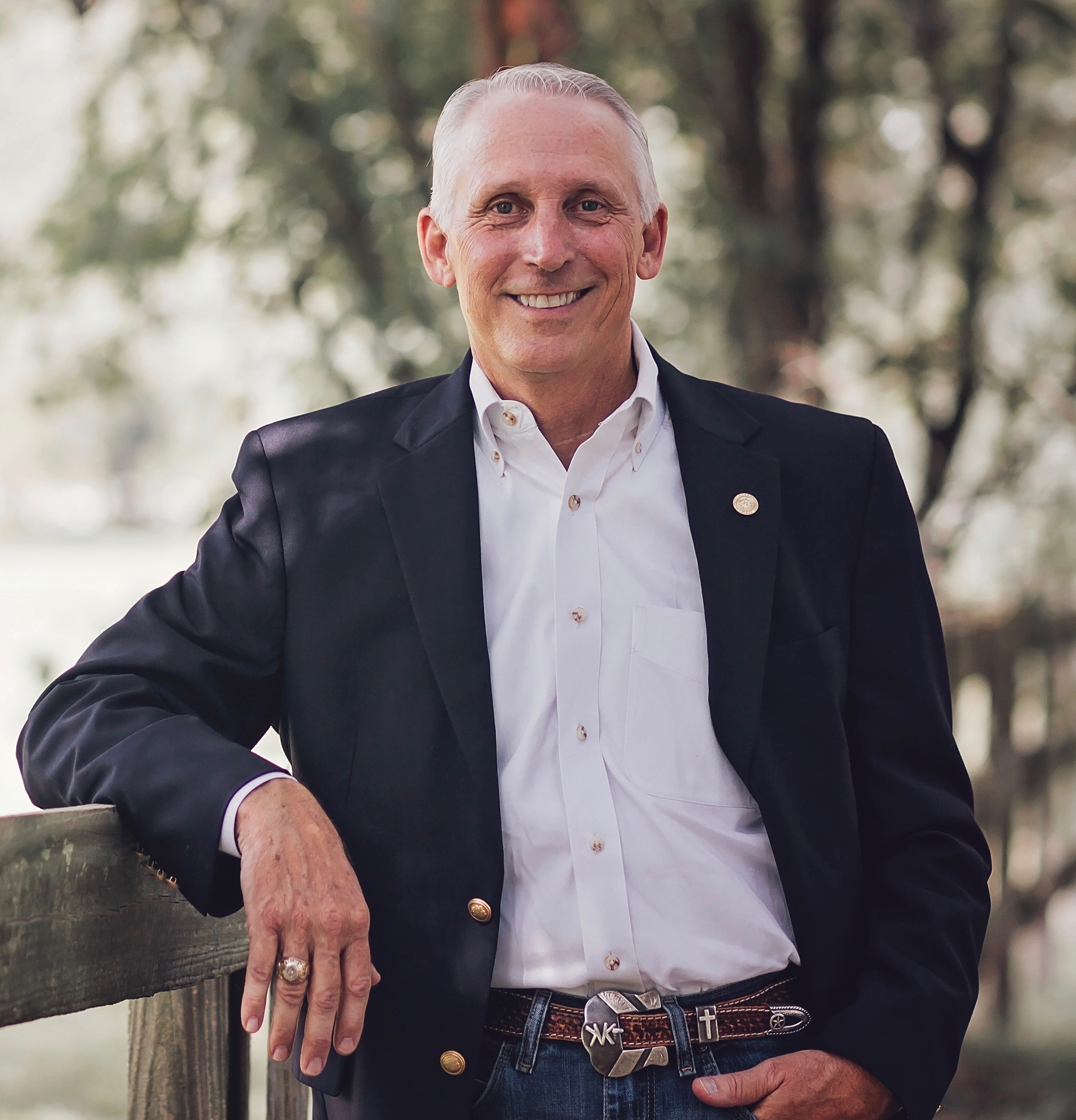
Gary VanDeaver*
-
Party:
Republican
-
Status:
incumbent
-
Branch:
Texas House
-
District:
1
-
Address:
PO Box 866
City:New Boston
State:TX
- Website:
-
Phone:
(903) 733-6507
- Email: