Eddie Morales, Jr.
Branch: Texas House District: 74 Status: Incumbent
Additional Information from ATPE
First elected to the Texas House in 2020. Current term expires January 2027. Running for re-election; ran unopposed in the Democratic primary and will be on the November 2026 general election ballot.
Voting records currently not available. Please check back later.
Survey Responses
RESPONSES TO THE 2026 ATPE CANDIDATE SURVEY:
1. If elected, what are your top priorities for Texas public education?Please describe any specific goals or legislative initiatives you would pursue to strengthen the state’s public education system.
I believe public education in Texas and the respective funding mechanisms are broken, leaving too much burden on local districts. I have been a strong advocate of a robust increase in the basic allotment, increased teacher pay, and an end to standardized testing.
2. Public Education Funding:The 89th Legislature passed an $8 billion school funding bill, HB 2. However, despite years of unanswered “inflationary challenges, a large majority of that funding was earmarked to specific programs and did not supply districts with significant flexible funding, leaving the majority of Texas students in districts with deficit budgets and other significant funding challenges. Do you believe Texas public schools should receive additional funding? If so, how should the state pay for it, and should that funding be earmarked at the state level or provide districts with flexible dollars?
While I was proud and eager to pass HB 2 to provide the necessary and overdue funding for our public schools. Ideally, I believe the state should fundamentally restructure the financing mechanism for public education. There should be a substantial increase in the state share of public education funding. While earmarks are essential for state directives and vision, I believe it is essential that every community maintain flexibility to cater to the specific needs of its district.
3. ESA Vouchers:Education savings accounts (ESAs) redirect public funds to private or home schools. How do you believe Texas should fund public schools, traditional and charter, alongside ESA vouchers? How should ESA spending be held accountable to taxpayers?
I voted against vouchers (ESAs) and to ensure accountability for taxpayer dollars, support the full repeal of the state voucher program.
4. Teacher Recruitment and Retention:Under HB 2, passed in 2025, all educators in core content courses (math, English, science, and social studies) must be certified by 2030. While this is a good start, more can and should be done to ensure high-quality teachers continue to enter the classroom. What are your suggestions to improve the quality of the new teacher pipeline?
In my three terms serving in the Texas House, I believe the number one issue is teacher pay – for both retaining and attracting teachers across the state. Base salary must be increased. For House District 74, higher education was a challenge, as aspiring educators must leave to pursue their college degree and in too many instances, never return home. For Eagle Pass specifically, the closest college is over 100 miles away. In the 89th Legislative Session, I passed HB 1022 to expand Sul Ross State University International to a full four-year college with the support of the Texas State University System. Beginning Fall 2026, they will begin freshman enrollment. This issue will be beneficial to home growing our future educators and bolstering our local schools.
5. Educator Pay and Benefits:The 89th Legislature passed legislation creating a new mechanism to provide only classroom teachers with tiered raises based on early years of service and their district’s student enrollment. While the raises were significant, they did not apply to all campus educators, and the program created a significant negative funding stream at the district level due to unfunded increased costs for non-salary compensation tied to payroll, such as TRS retirement contributions. Do you support a state-funded across-the-board pay raise for all Texas educators? How would you ensure that compensation keeps pace with inflation and remains competitive with other professions?
I was proud to vote in favor of the pay raises in the 89th Legislative Session, but it was overdue. After the 88th Legislative Session, when educators, students, and our schools were used as pawns to pass ESAs, our educators deserved a substantial increase in pay, not just for retention, but also for recruitment – especially in our rural communities across House District 74. I believe and advocate for an across-the-board increase in base pay for educators throughout the state to alleviate local burdens and reduce the impacts of too frequent unfunded mandates. Increase in base salary should be reevaluated by the Legislature as economic conditions and budgets fluctuate. The reason for this belief is that following the 82nd Legislative Session, the Legislature had to make drastic reductions in spending given the budget shortfall.
6. Educator Health Care:The high cost of health insurance for active and retired educators continues to reduce take-home pay, with educators shouldering the vast majority of their ever-increasing heath care costs. How would you address the affordability and sustainability of educator health care, particularly the TRS-ActiveCare and TRS-Care programs?
Healthcare is too expensive across the board and must be holistically reformed. In House District 74, even if an individual has the means to pay for coverage, they don’t have access to coverage. Our rural hospitals and clinics across HD74 have continued to close and run in the negative. Most recently, we lost mobile clinics. Not to mention, Texas has the highest uninsured rate in the nation, driving increased premiums for everyone. Texas leaves billions of our own tax dollars on the table, watching our access dwindle by not expanding Medicaid. Texas must also take on the insurance companies that continue to achieve record profits while driving up the cost for hardworking Texans.
7. Retirement Security:Do you believe the Teacher Retirement System of Texas (TRS) should remain a defined-benefit pension plan for all current and future members? If not, what is your plan to provide a secure retirement for Texas educators, particularly considering that state law has been set up such that most districts do not participate in Social Security?
Yes.
8. Accountability and Assessment Reform:The Legislature has passed a new “through-year” multi-test model under HB 8. What role should standardized testing play in evaluating students, teachers, and schools? Should test results continue to determine A–F accountability ratings or teacher pay?
No. While I do believe some standardized testing provides valuable insight into our schools, test results should not determine accountability ratings. I voted no on HB 8 because I did not fix the problem, but rather, made it worse. The current form of evaluation is simply outdated and a more contemporary means of examining student and school success.
9. Parental Rights and Community Voice:Recent legislative debates have focused on “parental rights” in education. In your view, what is the appropriate balance between accommodating the often conflicting wishes of individual parents while maintaining policies that reflect the broader community’s educational priorities and still providing consistency and an appropriate level of professional deference to educators?
As a father of three and with a daughter who was a former educator, I believe that parent-teacher interaction can be valuable for both perspectives. However, I also believe the local school board is the best conduit for communicating the community priorities.
10. School Safety:HB 3 (2023) imposed new school safety requirements but did not fully fund them. Although the 89th Legislature increased the School Safety Allotment, many districts continue to face substantial unfunded staffing and facility costs associated with school safety laws. How would you make schools safer and ensure the state provides adequate funding to meet safety mandates?
Going back to my answer in question 5, I agree that the state imposes too many unfunded mandates on our schools. During the 89th Legislative Session, I authored House Bill 1851 to allow our rural and underserved schools to acquire surplus DPS equipment from the Texas Facilities Commission at low-cost/donated rates to ensure school districts across HD74 can keep our students safe.
11. Curriculum and Local Control:What do you believe is the proper role of the State Board of Education, the Texas Education Agency, and local school districts in setting curriculum standards and selecting instructional materials?
While I believe in the role of the elected State Board of Education to set the guidelines and parameters of curriculum in our public schools, I support the active involvement of all school districts across the state. However, I believe the TEA has grown too influential and filled with unelected bureaucrats who continue to place obstacles in the way of our schools, teachers, and students.
12. Educator Rights and Professional Associations:State law allows educators and other public employees to voluntarily join professional associations such as ATPE and have membership dues deducted from their paychecks at no cost to taxpayers. Do you support or oppose allowing public employees to continue exercising this right? Why or why not?
As an advocate for labor rights across the board, I will always support the rights of workers in every aspect of Texas. I will continue to support voluntary participation in any association, including ATPE.
RESPONSES TO THE 2024 ATPE CANDIDATE SURVEY:
1. If elected, what are your top priorities for public education?
Above all, it's imperative that we raise the basic allotment to meet national standards. Nearly 3/4 of teachers are considering leaving their profession -- we must raise the wages of our educators. Beyond the basic allotment, I believe the State should increase its share of public education to reduce the burden on local districts.
2. Voucher programs take many forms (tax credits, scholarships, education savings accounts, etc.) and are either universal or aimed at specific subpopulations (special education students, low-income students, students attending schools with poor A-F accountability ratings, etc.). Would you vote to create a voucher program of any type to pay for students to attend non-public K-12 schools, such as private or home schools?
No. Public dollars belong in our public schools. I will oppose vouchers at every turn.
3. In 2023, the Texas Legislature passed House Bill (HB) 3 requiring a number of new school safety measures. However, many believe the Legislature did not adequately increase funding to cover the cost of the mandates in HB 3 or other locally adopted school safety measures. How would you work to make schools safer and ensure such initiatives are properly funded?
I supported HB 3, but there is still much more we can do. Parents and families should not have to fear for their student's safety in our public schools. Beyond just increasing funding for school safety, we need to have common sense gun-safety laws that would have prevented the heinous and callous acts of evil we continue to witness. This includes raising the age to 21 to buy a semi-automatic rifle, background checks, and red flag laws.
4. Despite a record-breaking surplus of $38 billion during the 2023 legislative session, school funding formulas were not increased to keep pace with inflation since they were last adjusted in 2019. Do you believe Texas public schools should receive additional funding? If so, how should the state pay for it?
Absolutely, our public schools have been systematically defunded over the course of decades. We should utilize these dollars to increase the basic allotment and increase teacher pay. These are critical things the state can do, but we must reject the billion-dollar voucher initiative to ensure our public schools get the funds they deserve.
5. Texas has faced growing teacher shortages in recent years, with many schools hiring uncertified teachers to fill the gaps. How would you work to ensure Texas public schools have an adequate number of trained and certified teachers?
We do not need task forces and committees to study this problem. Teachers need a salary increase. I will continue to fight for that to attract and retain more teachers.
6. Inadequate compensation hampers the recruitment and retention of high-quality educators. Do you support a state-funded across-the-board pay raise for all Texas educators?
Yes.
7. The high cost of health insurance available to educators is a significant factor decreasing their take-home pay. How would you address the challenge of rising health care costs facing Texas educators and ensure access to affordable health care?
Healthcare access and affordability is a pressing problem for all Texans. Texas must expand Medicaid to reduce our state's risk pool and drive down costs, but also ensure our rural hospitals and clinics remain open for the countless educators in our rural communities. This, in conjunction with increasing teacher pay, I believe, would go a long way to reducing costs and expanding access for our teachers to get the care they need.
8. What do you feel is the proper role of standardized testing in the Texas public education system? For instance, should student test scores be used as a metric in determining teacher pay, school accountability ratings, evaluating teachers, measuring student progress, etc.?
Standardized testing should not be held to any funding formula. They should provide metrics on student success and be utilized as a tool for policy decisions, not funding.
9. In your opinion, what is the proper balance between accommodating an individual parent’s or student’s wishes and the taxpaying community’s interest in directing and maintaining an optimal educational environment for the student population as a whole?
Parents have the option to send their child to private school, public charter, or homeschool. That is their right. But public education is the only form of education that should be subsidized by the state (including public charter schools).
10. Do you believe the Teacher Retirement System (TRS) should be maintained as a traditional defined-benefit pension plan for all future, current, and retired educators, or do you support converting TRS to a defined-contribution structure that is more like a 401(k) plan, in which future benefits are not guaranteed?
TRS should maintain as a traidtional defined-benefit pension plan.
11. State law allows educators and other public employees to voluntarily choose to join professional associations such as ATPE and have membership dues deducted from their paychecks at no cost to taxpayers. Do you support or oppose letting all public employees continue to exercise this right?
Yes, I support the right of workers, including public employees, to voluntarily join organizations/associations such as ATPE.
Did not respond to the 2022 or 2020 ATPE Candidate Survey.
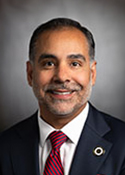
Eddie Morales, Jr.
-
Party:
Democrat
-
Status:
Incumbent
-
Branch:
Texas House
-
District:
74
-
City:
Eagle Pass
State:TX
- Website:
- Email: