August 14, 2026


The Texas House Public Education Committee held its second day of interim hearings Tuesday, focusing on the rising number of uncertified teachers in Texas, as well as opportunities to improve early literacy and numeracy in PK-3.
The committee questioned invited panelists on the underlying cause of the increase in uncertified educators, which districts are hiring them and why, and what the state can do to address the issue. Currently, more than one-third of all new educator hires in Texas are uncertified, according to Texas Education Agency Deputy Commissioner Kelvey Oeser.
Reliance on uncertified teachers can be problematic for several reasons, including increased turnover. The average five-year retention rate for uncertified educators is currently 39%—which is significantly less than the retention rate of their certified peers, particularly among those who have completed traditional four-year educator preparation programs. This revolving door of new uncertified teachers then exacerbates the teacher burnout crisis. Additional burdens are placed on more seasoned members of the team who are expected to pick up the slack. Another complication is the inability to track career and disciplinary data for uncertified educators as they move from district to district. An uncertified educator disciplined in one district can simply move districts, and the new district has no way to research that educator’s background as it could do with a certified educator. The prior district would have had no way to file any sanctions with the state because the educator has no certificate to sanction. All these issues add up to potential problems for students.
The rise in the number of districts becoming Districts of Innovation (DOI) was repeatedly cited as one reason for the explosion of uncertified teachers in Texas. The DOI status was created by HB 1842 during the 84th legislative session in 2015. The purpose of DOI was to provide more flexibility to districts so they could be creative and innovative in their methods and practices. In reality, however, DOI has mostly allowed districts flexibility from regulations such as school start dates, class size, and teacher certification. Districts are unfettered in their ability to hire uncertified teachers under the DOI system. This has led to an explosion of uncertified teachers in Texas classrooms as the Great Resignation occurred and many veteran teachers left the classroom.
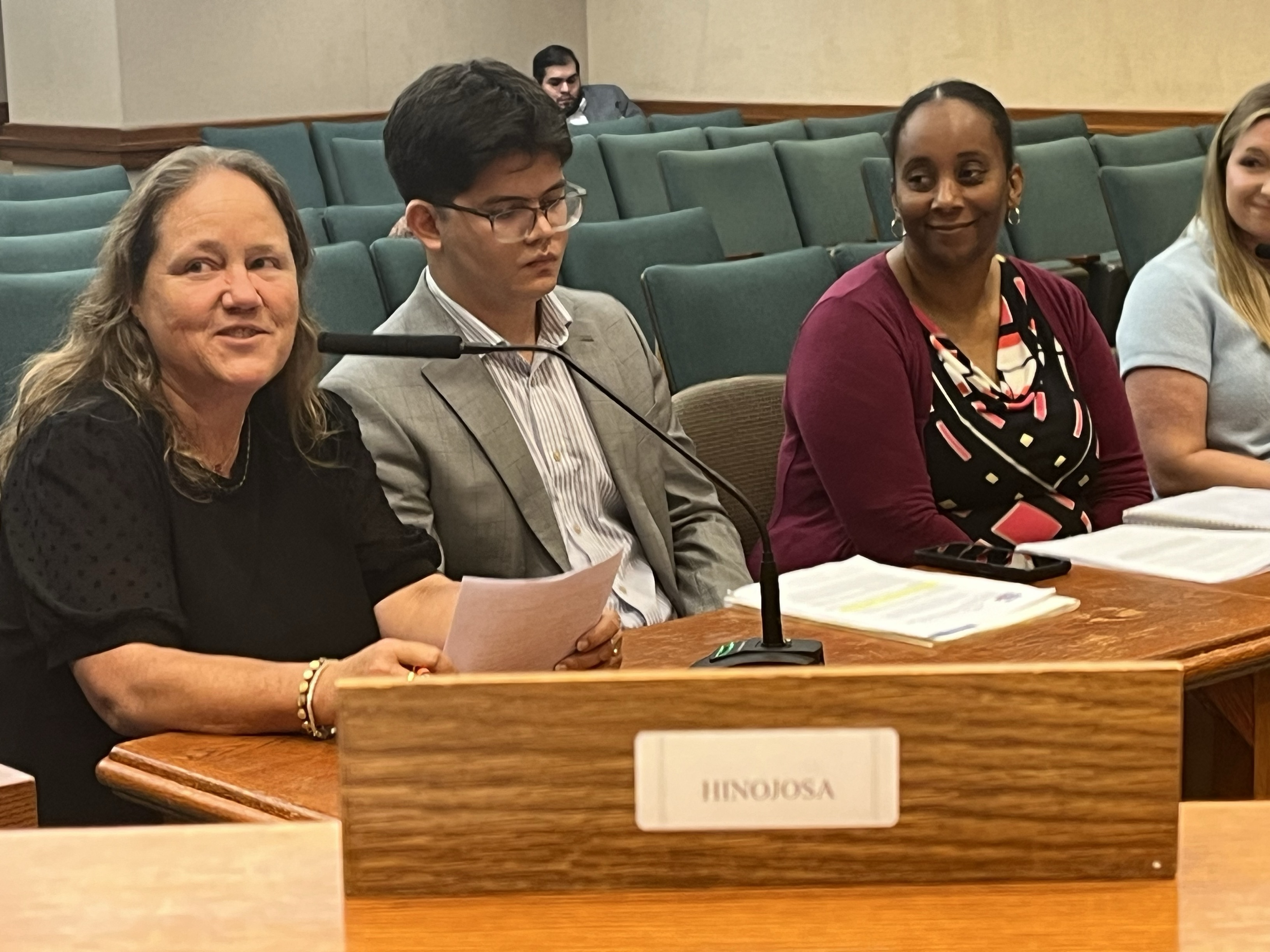
ATPE Immediate Past State President Jayne Serna testified that teacher attrition, especially during the school year, is very disruptive to students, and that not having a highly qualified educator makes learning virtually impossible. “The most important factor in a successful classroom is the teacher, and the most successful teacher is certified,” Serna stated. Serna recommended the committee amend DOI rules to limit uncertified teachers to career and technical education (CTE) courses where a person with field experience could be brought in to teach subjects such as welding; amending DOI rules to prohibit exemptions from parental notification if their child is in an uncertified teacher’s classroom; and a grant program to assist uncertified educators with obtaining certification.
When recommending possible solutions to the uncertified teacher problem, Oeser said: “It will be important to address a continuum of policy solutions within recruitment [and] consider expanding ‘grow your own’ programs to encourage more high school students and paraprofessionals to become teachers and to get teaching certificates. Within preparation, consider restructuring the certification framework to differentiate between higher-quality programs and lower-quality options and providing additional funding incentives to offset the higher costs of the higher-quality programs. Within novice teacher supports, consider expanding the mentor program allotment, and within compensation, consider increasing and differentiating the minimum salary schedule by certification pathway and expanding the Teacher Incentive Allotment.”
Additionally, Oeser recommended making the profession more attractive by raising teacher pay. Rep. Alma Allen (D–Houston), a former classroom teacher and administrator, agreed with this, pointing out that people stay where they are happy, appreciated, and well compensated. She accused the state of “destroying the profession” by not addressing teacher pay and other workplace concerns over the past several years.
“Pay is important,” Allen said. “It’s been important for many years. Nobody’s attracted to the profession anymore. Nobody’s going into the profession, and they’re leaving in droves, and they don’t come back.”
Rep. Gina Hinojosa (D–Austin) agreed and said the state should use its $32 billion surplus to fund teacher pay raises. She pointed out that Republican lawmakers had held teacher pay hostage in an attempt to pass a voucher last session, which ultimately failed.
“If we were to pay all Texas teachers a pay raise of $10,000, it would cost us about $3.8 billion a year,” Hinojosa said. “Take that for a biennium two years together, that’s around $8 billion. We absolutely have the money. It is money that we have collected for our schools from property taxpayers to pay teachers, which is the most important investment we can make in a child’s education.”
ATPE Governmental Relations Director Monty Exter also testified, asking committee members to remember that while the most important in-school factor tied to student success is a high-quality teacher and that the state must get that right, external factors—such as familial expectations for academic achievement and access to resources—have an even great statistical effect on student outcomes. Increased teacher attrition and, moreover, a failure to achieve optimal outcomes for students can be traced back to a lack of state resources provided to low-income families and the negative portrayal of certain student groups or schools, whether due to lack of funding, reliance on an abusive accountability system, or simply false, hurtful political rhetoric.
The committee also discussed early literacy and numeracy outcomes in grades Pre-K through 3. ATPE submitted written testimony, pointing out that access to Pre-K is generally shown to have positive impacts on early numeracy and literacy and asking the committee to work to expand access to Pre-K programs by providing funding to recruit and retain Pre-K teachers, expand public-private partnerships with child care centers, and lower class sizes. Early intervention, especially in identifying students with special education needs, is critical for these students to meet their academic goals. Additional funding could be used to hire intervention specialists and diagnosticians.
Interim hearings and the charges they address do not necessarily correlate to action that will be taken during the legislative session; however, they are a good window into a committee’s potential priorities in the next session. Recommendations made by those testifying during the hearings could make their way into potential legislation.
Read ATPE's testimony below: