Rhetta Bowers
Branch: Texas House District: 113 Status: incumbent
Additional Information from ATPE
First elected to the Texas House in 2018. Current term expires January 2027. Running for re-election; ran unopposed in the Democratic primary and will be on the November 2026 general election ballot.
Endorsed in the 2022 primary election by Texas Parent PAC, a pro-public education organization that advocates for adequate and equitable funding of public schools, local control, teacher quality, and the prevention of private school vouchers. She also received the group's endorsement in the 2020 and 2018 elections.
Endorsed in the 2020 general election by the editorial board of The Dallas Morning News. Bowers also received the group's endorsement in the 2018 primary election.
In the 2018 election, she was recommended favorably by Texans for Public Education, a grassroots educators' group that researched and rated candidates in the 2018 election based on their stances toward public schools.
Ran unsuccessfully for the same seat in 2016.
Voting records currently not available. Please check back later.
Survey Responses
HAS NOT RESPONDED TO THE 2026 ATPE CANDIDATE SURVEY.
Did not respond to the 2024, 2022, or 2020 ATPE Candidate Survey.
1. If elected, what will your top priorities for public education be?
My plan for public education will be to review the findings of the Public School Finance Commission created during the 85th legislative session. I will work with my colleagues to find a way to update and improve our current school finance formula and look at the basic allotment per student. I will also work to ensure the state begins to pay its fair share and more than the less-than 40% it is currently paying. I will urge my colleagues to look at the 1.8 billion dollars that members on both sides of the aisle felt comfortable with as proposed in House Bill 21 and encourage them to consider that as a great starting point. Making the right and appropriate investment in our teachers and children will never be a mistake or something we regret.
2. Is there a need to increase state funding to meet the needs of our student population? If so, how would you recommend securing more revenue for public education?
There is a need to increase state funding to meet the needs of our current and steadily growing student population. I would suggest we first review the current formulas and have that conversation after we review the findings of the commission. We should also look at House Bill 21, revisit the 1.8 billion that was looked upon as acceptable by both sides of the house and then not be afraid to take money from the Economic Stabilization Fund also known as the Rainy Day Fund.
3. Healthcare costs for educators have increased dramatically and outpaced the state's contributions, with many current and retired educators now paying more out of pocket than their counterparts in other states or in other professions. As a legislator, how would you address this crisis to ensure that active and retired educators have access to affordable healthcare?
I think this is a serious issue and one that we cannot let go untouched. Our active teachers and retired educators are paying more out of pocket than their counterparts in other states or in other professions and they have not had a salary increase in 17 years. We have to make sure active teachers and retirees have access to affordable healthcare and that they are not burdened with high bills that make it difficult for them to maintain good health. When elected, I will work with my colleagues to make sure our educators are taken care of by making sure that premiums aren't what keeps them from seeking medical care for themselves or for their families.
4. Do you believe the Teacher Retirement System (TRS) should be maintained as a traditional defined benefit pension plan for all future, current, and retired educators, or do you support converting TRS to a defined contribution plan that is more like a 401(k) plan, in which future benefits are not guaranteed?
I do believe that the Teacher Retirement System should be maintained as a traditional defined benefit pension plan for all future, current and retired educators.
5. What do you feel is the proper role of standardized testing in Texas's public education system? For instance, should student test scores be used for school accountability purposes, for evaluating teachers, for measuring student progress, etc.?
I do believe assessments are necessary, but I do not believe student test scores should be used for school accountability purposes, for evaluating teachers nor for measuring student progress.
6. Would you support a state-funded across-the-board pay raise for all Texas classroom teachers?
I would support a state-funded across-the-board pay raise for all Texas classroom teachers. We are not paying our classroom teachers what they are worth therefore we face high turnover and retention problems with some of our best and brightest educators in the State of Texas.
7. To what extent should student performance determine teacher pay?
Student performance should not determine teacher pay.
8. Would you vote to create any type of voucher, tax credit, scholarship, education savings account, or other program aimed at paying for students, including any subpopulation of students, to attend non-public K-12 schools, such as private or home schools?
No, I do not agree with vouchers and any other measure created to pay for students and reduce public school funding.
9. State law allows educators and other public employees to voluntarily choose to join professional associations like ATPE and have membership dues deducted from their paychecks at no cost to taxpayers. Do you support or oppose letting all public employees use payroll deduction for their membership dues?
I support letting public employees use payroll deduction for their membership dues.
10. Current law allows school districts with accountability ratings of "C" or better to become Districts of Innovation (DOIs) and exempt themselves from many state statutes, such as elementary school class-size limits, requirements for hiring certified teachers, and more. Would you recommend any changes to the criteria for becoming a DOI? Would you place any limitations on the state laws that can be waived by DOIs?
The current A-F system is not working for our school districts. Our school districts have little to no say. I along with school administrators across the state will be advocating for local control which will allow our school districts to have more impact. The state currently has 98% enforcement and school districts have about 2%. They are asking for more flexibility when it comes to school start dates, duty-free lunch periods and planning periods, making site-based decisions and minimum minutes of instruction. Over the last 6 years school districts in our area have started to design or create their own accountability systems. Administrators are deciding that testing should not be based on how our students will succeed, but more focus should be placed on how we graduate our students and their readiness to succeed.
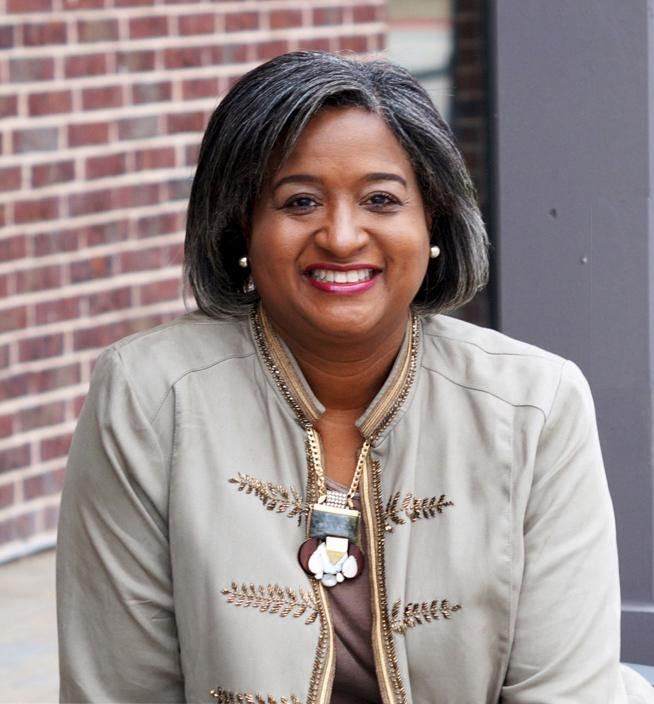
Rhetta Bowers
-
Party:
Democrat
-
Status:
incumbent
-
Branch:
Texas House
-
District:
113
-
Address:
7529 LARSON LN
City:Rowlett
State:TX
- Website:
-
Phone:
(972) 379-8080
- Email: