Jose Menendez
Branch: Texas Senate District: 26
Additional Information from ATPE
First elected to the Texas Senate in 2015. Current term expires January 2027. Running for re-election in the 2026 Democratic primary.
Member of the Senate Education Committee.
Menéndez won a special election to fill the unexpired term of former Sen. Leticia Van de Putte, who resigned in 2014. Menéndez earned 25.36 percent of the vote in a January 2015 special election and then earned 59.05 percent to win a February 2015 runoff election.
Menéndez previously served as State Representative for Texas House District 124 from 2000 to 2015.
Endorsed in the 2016 Democratic primary election by the San Antonio Express-News editorial board.
Voting records currently not available. Please check back later.
Survey Responses
HAS NOT RESPONDED TO THE 2026 ATPE CANDIDATE SURVEY.
Did not respond to the 2022 or 2020 ATPE Candidate Survey.
Below are the candidate's responses to the 2014 ATPE Candidate Survey:
1. Is there a need to increase funding to meet the needs of our student population? If so, how would you recommend securing more revenue for public education?
Yes. Texas must utilize the Rainy Day Fund to restore the over $1.5 billion remaining in cuts from 2011. Unfortunately, restoring this amount isn't enough because it doesn't account for growth in school districts. So the RDF must also be used to fund population growth since 2011, which amounts to a rough increase of $600 more per student. Once those deficits are restored the state must look at more equitable funding streams. The state has to move away from a public school finance system that is unconstitutional and unfairly incentivizes property wealth districts over property poor districts. Revising the WADA revue allocation system is one way to accomplish this goal. Moreover, The state must revaluate how much property wealth districts are able to contribute financially to their ISD versus how much property poor districts are able to contribute. The state should then mitigate the differences by allocating more funding to property poor districts. This can be accomplished by closing the loopholes in the Business Tax and Commercial Property Taxes
2. Regardless of the level of funding, do you believe that Texas public education dollars are being spent in an appropriate manner, or should the funds be reallocated and spent in different ways?
The state could do a better job at allocating money to fund public education. One example is the state should increase and reevaluate the Cost of Education Index (CEI). The CEI hasn't been updated since 1991. Our schools would receive more funding if the state honestly analyzed the CEI based on 2015 data. Transportation costs are also a large portion of ISDs budgets. The state should appropriate more money for transportation costs so school districts can put more money into the classroom. Lastly, the state must give more power to school boards to raise money in their districts without tax elections. If the state truly values public education it cannot simultaneously cut public education funding and tie the hands of school boards to raise funds locally.
3. Would you vote to spend public tax dollars on a voucher, tax credit or scholarship that allows students to attend non-public schools in grades K–12? Why or why not?
Vouchers and tuition tax credits undermine our public education system. Both programs siphon off desperately needed funds to our public schools. The answer to a struggling public education system is not to give up on the system and support private or religious schools. The answer is properly funding our current public education system and working with ISDs that may be struggling to offer them needed resources that strengthen their schools. The state cannot be supportive of a private or religious school education system because those schools are selective. Those schools can choose which students to admit and which to leave behind. Texas must support and fund our public education system because the future of our state is dependent on all students, regardless of background, getting a world-class education. We can and we must provide that for the children of Texas.
4. Do you believe the Teacher Retirement System (TRS) should be maintained as a traditional defined benefit pension plan for all future, current and retired educators, or would you vote to convert TRS to a defined contribution plan that is more like a 401(k), in which future benefits are not guaranteed? Why?
A defined-benefit pension system is the backbone of retirement for future, current, and retired educators. I would adamantly oppose any conversion to a defined contribution plan. Moreover, adequately funding the TRS pension fund is critical to the livelihood of retired teachers. For many retired teachers this is their sole revue stream to pay bills and stay afloat. The state must honor its commitment to retired teachers and ensure the TRS pension is always tied to inflation and cost-of-living. Moreover, due to increased cost of living and healthcare costs our retired teachers have a difficult time making ends meat which is why in 2011, I authored HB 1699 which would give retired teachers a supplemental payment.
5. Local decisions on whether to continue a teacher's employment and how much to pay each teacher are often based on evaluations. To what extent, if any, should a teacher's evaluation be based on his students' scores on state standardized tests? If you believe student test scores should factor into a teacher's evaluation, how would you recommend evaluating teachers in grades or subjects for which there are no state standardized tests?
Teachers' employment should not be based on students' standardized test scores alone. Comprehensive evaluations, encompassing a variety of factors from student grades, to tenure, to classroom behavior and management, to participation in school activities etc., should all determine a teacher's employment and pay rate. Teachers should not be punished because they were given a classroom of students that do not take tests well.
6. Would you vote to maintain a hard cap on the number of students per class, or should school administrators be given more flexibility to increase class sizes? (Currently, the law imposes a cap of 22:1 in grades K–4 but allows schools to obtain a waiver, a step many of them routinely take.)
The goal should always be to maintain a cap on student to teacher ratio. 22:1 or even 20:1 is an appropriate number. However, I am sympathetic to the realities school districts face when the state continues to cut public education funding and refuses to fund growth in public schools. Therefore, I believe the state should get serious about maintaining a hard cap of students per class, but they only way to accomplish that is to equitably and adequately fund public education.
7. If a public school in your district failed to meet state accountability standards for two or more consecutive years, would you support allowing a private entity to take over the management of that school, essentially converting it to a charter school?
No - the state is abdicating its responsibility by turning over failing schools to a private entity. The answer is not to pass the buck to a private school, but rather work with that institution and offer it unique resources and assistance to turn the school around. By not funding and working with these struggling schools the state is setting them up for failure. Constitutionally the state of Texas is mandated to provide public education for all it citizens. It shouldn't be abandoning that duty to a private entity.
8. Do you believe charter schools in Texas have been largely successful? Should their presence be expanded? Why or why not?
Texas's Charter School system is broken and must be reformed. This is evident because the state had to close 14 charter schools this year. It's important to have schools that are agile to students needs, but it is becoming increasing clear that charter schools do not provide that flexibility and lack proper financial and academic oversight. Moreover, these charter schools may be well intended but until they can provide services to all students the state should invest in ISD's and local public schools instead.
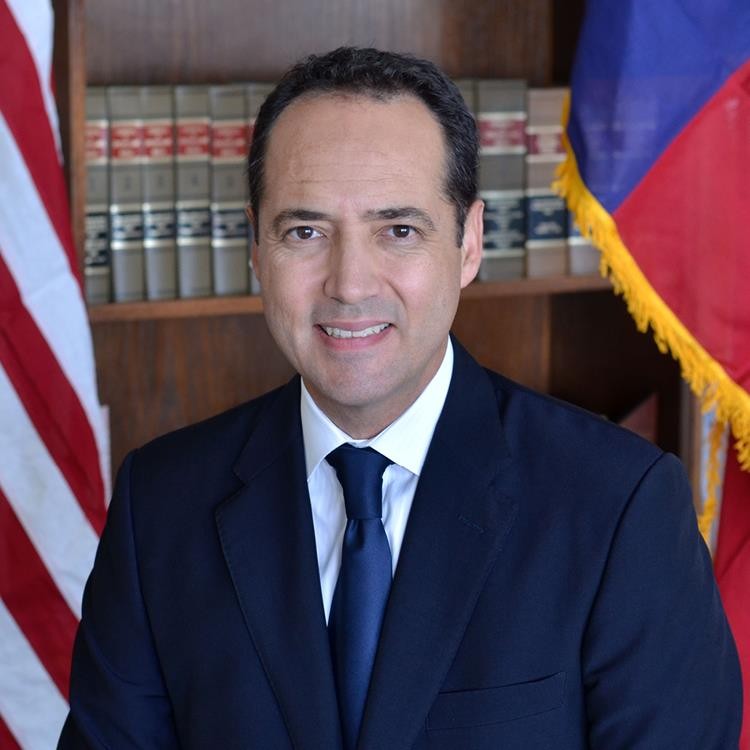
Jose Menendez
-
Party:
Democrat
-
Branch:
Texas Senate
-
District:
26
-
State:
AL
- Website:
-
Phone:
(210) 865-3190
- Email: